German International Students: 2026 Guide & Insights
Germany has firmly established itself as one of the world's most sought-after destinations for international education, with enrollment figures surpassing 400,000 students in recent years. The country's combination of tuition-free or low-cost education at public universities, world-class research facilities, and strong employment prospects continues to attract talented individuals from across the globe. For prospective students considering Europe as their study destination, understanding the landscape for german international students provides crucial insights into what makes this educational pathway both challenging and rewarding.
The Remarkable Growth of International Enrollment
Germany's appeal as a study destination has experienced consistent upward momentum, with international student numbers surpassing 400,000 in the most recent academic year. This milestone represents more than just impressive statistics; it reflects Germany's successful positioning as an educational powerhouse that rivals traditional destinations like the United Kingdom and the United States.
The German Academic Exchange Service (DAAD) has documented this growth trajectory meticulously, noting that Germany’s universities enrolled around 402,000 international students in the 2024/25 winter semester. What makes this figure particularly noteworthy is its diversity-students arrive from virtually every corner of the world, with particularly strong representation from Asian countries.
Regional Trends and Sending Countries
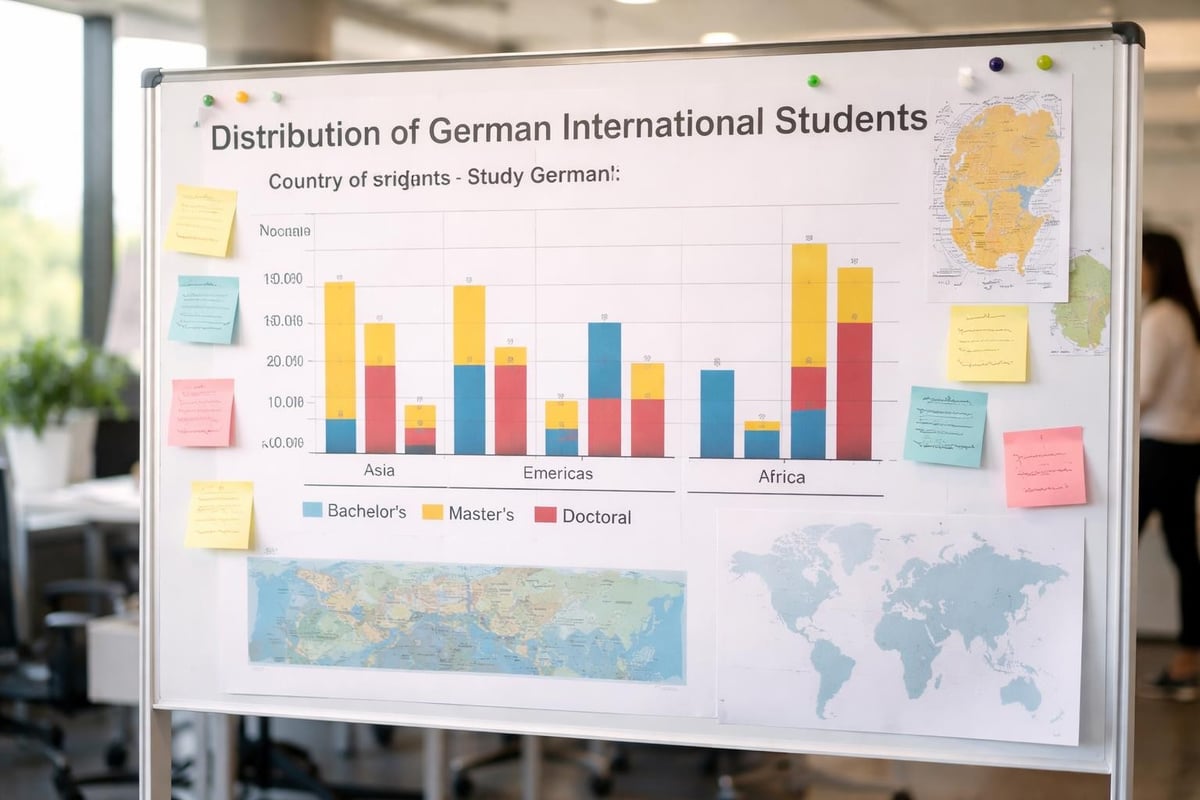
Recent data reveals fascinating patterns in the geographical origins of german international students. India has emerged as one of the fastest-growing source countries, with enrollment numbers experiencing double-digit percentage increases year on year. China continues to maintain its position as a leading sender of students, whilst countries in the Middle East and Africa show accelerating interest.
| Region | Growth Trend | Notable Features |
|---|---|---|
| Asia-Pacific | Strong growth | India leading expansion, China maintaining high numbers |
| North America | Increasing | United States showing renewed interest in German programmes |
| European Union | Stable | Consistent enrollment through mobility schemes |
| Africa | Emerging | Scholarship programmes driving accessibility |
The sustained growth in foreign enrollments during the 2025-26 academic year demonstrates that Germany's appeal transcends temporary trends. Institutions have adapted their offerings to meet international demand, with more English-taught programmes and enhanced support services.
Academic Excellence and Programme Diversity
German universities offer an extraordinary breadth of academic programmes, from engineering and natural sciences to humanities and arts. The country's reputation for technical education particularly attracts students seeking degrees in mechanical engineering, automotive design, computer science, and renewable energy technologies.
Key advantages of German higher education include:
- Tuition-free education at most public universities in several federal states
- Strong industry connections providing practical research opportunities
- World-renowned faculty and cutting-edge research facilities
- Dual study programmes combining academic learning with workplace experience
- International recognition of qualifications across European and global markets
The Technical Universities (Technische Universitäten) such as RWTH Aachen, TU Munich, and TU Berlin maintain exceptional reputations in engineering disciplines. Meanwhile, comprehensive universities in cities like Heidelberg, Freiburg, and Göttingen excel across traditional academic fields. Universities of Applied Sciences (Fachhochschulen) provide professionally oriented education with strong employment outcomes.
English-Taught Programmes Expansion
One significant development facilitating access for german international students has been the proliferation of English-taught degree programmes. Whilst German language proficiency remains valuable for daily life, students can now complete entire bachelor's or master's degrees in English across numerous disciplines.
This linguistic accessibility has opened doors for students who might otherwise struggle with German language requirements, though most advisors recommend learning German to enhance cultural integration and expand employment opportunities post-graduation.
Navigating Challenges and Cultural Adaptation
Despite its many attractions, studying in Germany presents distinct challenges that prospective students must prepare to address. The common challenges faced by international students include language barriers, bureaucratic processes, and cultural adjustment periods that require patience and resilience.
Language and Integration
German language proficiency significantly impacts the student experience beyond the classroom. Whilst English works in academic settings and major cities, daily activities-from dealing with government offices to socializing outside international circles-often require German skills.
Practical language considerations include:
- Enrollment in intensive German courses before semester commencement
- Consistent practice through language exchange partnerships
- Engagement with local communities rather than exclusively international student groups
- Understanding that many bureaucratic processes default to German documentation
- Recognizing language as a gateway to deeper cultural understanding
Cultural differences extend beyond language, encompassing communication styles, social norms, and academic expectations. German academic culture values independent research, critical thinking, and self-directed learning, which may differ from educational systems emphasizing more structured guidance.
Administrative and Bureaucratic Navigation
Germany's reputation for thorough bureaucracy proves both a blessing and a challenge. The structured systems ensure fairness and consistency, yet navigating residence permits, health insurance registration, and university enrollment requires attention to detail.
For students unfamiliar with these processes, professional guidance through study abroad consultancy services can prove invaluable. SBUB Group Ltd. offers comprehensive support helping students navigate visa applications, university selection, and settlement logistics, ensuring a smoother transition into German academic life.

Financial Planning and Living Costs
Whilst tuition fees remain minimal or non-existent at many German public universities, living expenses require careful budgeting. Cities vary considerably in cost, with Munich, Frankfurt, and Hamburg among the more expensive options, whilst smaller university towns offer more affordable living.
| Expense Category | Monthly Range (EUR) | Annual Total (EUR) |
|---|---|---|
| Accommodation | 300-700 | 3,600-8,400 |
| Food & Groceries | 200-300 | 2,400-3,600 |
| Health Insurance | 110-120 | 1,320-1,440 |
| Transport | 30-100 | 360-1,200 |
| Books & Materials | 30-50 | 360-600 |
| Personal Expenses | 100-200 | 1,200-2,400 |
Students must demonstrate financial resources through blocked accounts (Sperrkonto) showing approximately €11,904 for visa applications in 2026. This requirement ensures students can support themselves without relying on public funds.
Scholarship Opportunities
Numerous scholarship programmes specifically target international students, with organizations like DAAD offering generous funding packages covering tuition, living expenses, and travel costs. University-specific scholarships, regional government programmes, and private foundation grants provide additional funding avenues worth exploring thoroughly during the application process.
Employment and Career Prospects
Germany's robust economy and demographic trends create favorable conditions for german international students seeking employment. The country faces skilled labour shortages in numerous sectors, particularly technology, engineering, healthcare, and scientific research.
Post-graduation employment pathways include:
- 18-month residence permit extension specifically for job searching
- Blue Card eligibility for highly qualified workers
- Strong demand in STEM fields and technical disciplines
- Competitive salaries compared to global standards
- Pathways to permanent residence and citizenship
Working whilst studying is permitted up to 120 full days or 240 half days annually for students from outside the European Union. This allows part-time employment to supplement living expenses whilst maintaining focus on academic commitments.
Industry Connections and Internships
German universities maintain exceptionally strong connections with industry partners, facilitating internship placements and research collaborations. These practical experiences prove invaluable for building professional networks and understanding workplace culture, significantly enhancing employment prospects upon graduation.

Accommodation and Housing Strategies
Securing suitable accommodation ranks among the most pressing concerns for arriving students. Student residence halls (Studentenwohnheime) managed by Studentenwerk organizations offer affordable, convenient options, though demand consistently exceeds supply in popular university cities.
Housing Search Timeline
Beginning the accommodation search at least 3-4 months before semester commencement proves essential. Many students initially arrange temporary accommodation through hostels or Airbnb whilst conducting in-person viewings for longer-term rentals.
Private rental markets operate through various platforms including WG-Gesucht, Immobilienscout24, and university-specific forums. Shared flats (Wohngemeinschaften or WGs) provide cost-effective options whilst facilitating social connections and language practice.
Health Insurance and Wellbeing
Comprehensive health insurance remains mandatory for all students in Germany, with public health insurance (gesetzliche Krankenversicherung) costing approximately €110-120 monthly for students under 30. This coverage provides access to Germany's excellent healthcare system, including general practitioners, specialists, and hospital services.
Mental health support through university counselling services addresses the psychological challenges of cultural adjustment, academic pressure, and separation from family networks. Many universities have expanded international student support recognizing the unique stresses this population faces.
Integration Beyond the Classroom
Successful integration extends far beyond academic achievement, encompassing social connections, cultural participation, and community engagement. Universities offer extensive extracurricular activities, student organizations, and cultural events specifically designed to facilitate networking among german international students and domestic peers.
Integration strategies that enhance the student experience:
- Joining subject-specific student groups or fachschaften
- Participating in sports clubs and recreational activities
- Volunteering with local organizations or international student mentoring
- Attending cultural festivals and regional celebrations
- Exploring Germany's diverse regions through affordable student travel options
The experiences and perspectives of international students reveal that satisfaction levels correlate strongly with proactive engagement rather than passive participation in university life.
Application Process and Timeline
Successful applications to German universities require meticulous preparation and adherence to specific timelines. Most programmes have application deadlines of July 15th for winter semester commencement (October) and January 15th for summer semester start (April).
The application process typically involves:
- Credential evaluation through uni-assist for applicants with non-German qualifications
- Language proficiency demonstration (TestDaF, DSH for German; IELTS, TOEFL for English programmes)
- Preparation of motivational letters and academic references
- Compilation of certified document translations
- Potential entrance examinations for specific subjects
Understanding these requirements early proves crucial, as document preparation and credential recognition can extend over several months. Professional guidance helps navigate programme-specific requirements and ensures applications meet all criteria.
Future Outlook and Emerging Trends
Germany's commitment to internationalization suggests continued growth in opportunities for foreign students. Universities are expanding English-taught offerings, enhancing support services, and developing specialized programmes addressing global challenges in sustainability, digitalization, and healthcare innovation.
Germany’s position as the second most important destination for international academics creates a vibrant research environment where students benefit from cutting-edge knowledge exchange. This academic prestige, combined with practical affordability, positions Germany advantageously against competitors charging substantial tuition fees.
Policy developments around immigration and residence permits continue evolving favorably, with recent reforms simplifying pathways from student status to employment-based residence. These changes acknowledge Germany's need for skilled professionals whilst recognizing international graduates' valuable contributions to society and economy.
The journey of german international students reflects a transformative educational experience combining academic excellence, cultural immersion, and professional development in one of Europe's most dynamic countries. Success requires thorough preparation, realistic expectations, and willingness to embrace both challenges and opportunities inherent in international study. Whether you're exploring options across multiple countries or specifically interested in German universities, SBUB Group Ltd. provides expert guidance throughout the entire process-from initial university selection and application preparation through visa assistance and accommodation arrangements-ensuring your transition to studying in Germany proceeds smoothly and successfully.