
Admission in Australia: Your Complete 2026 Guide
Australia has emerged as one of the world's premier destinations for international education, attracting over 650,000 students from across the globe each year. The country's world-class universities, diverse cultural environment, and post-study work opportunities make admission in Australia a highly sought-after achievement for ambitious students. Understanding the admission landscape, requirements, and strategic approaches can significantly enhance your chances of securing a place at your preferred Australian institution.
Understanding the Australian University System
Australia's higher education system consists of 43 universities, including the prestigious Group of Eight institutions renowned for research excellence. The academic year typically runs from February to November, divided into two semesters, though some universities offer trimester systems providing greater flexibility for international students.
Australian universities operate on a merit-based admission system that evaluates academic performance, English language proficiency, and relevant experience. The Australian Qualifications Framework (AQF) establishes national standards across all education levels, ensuring consistency and quality across institutions.
Key Academic Levels
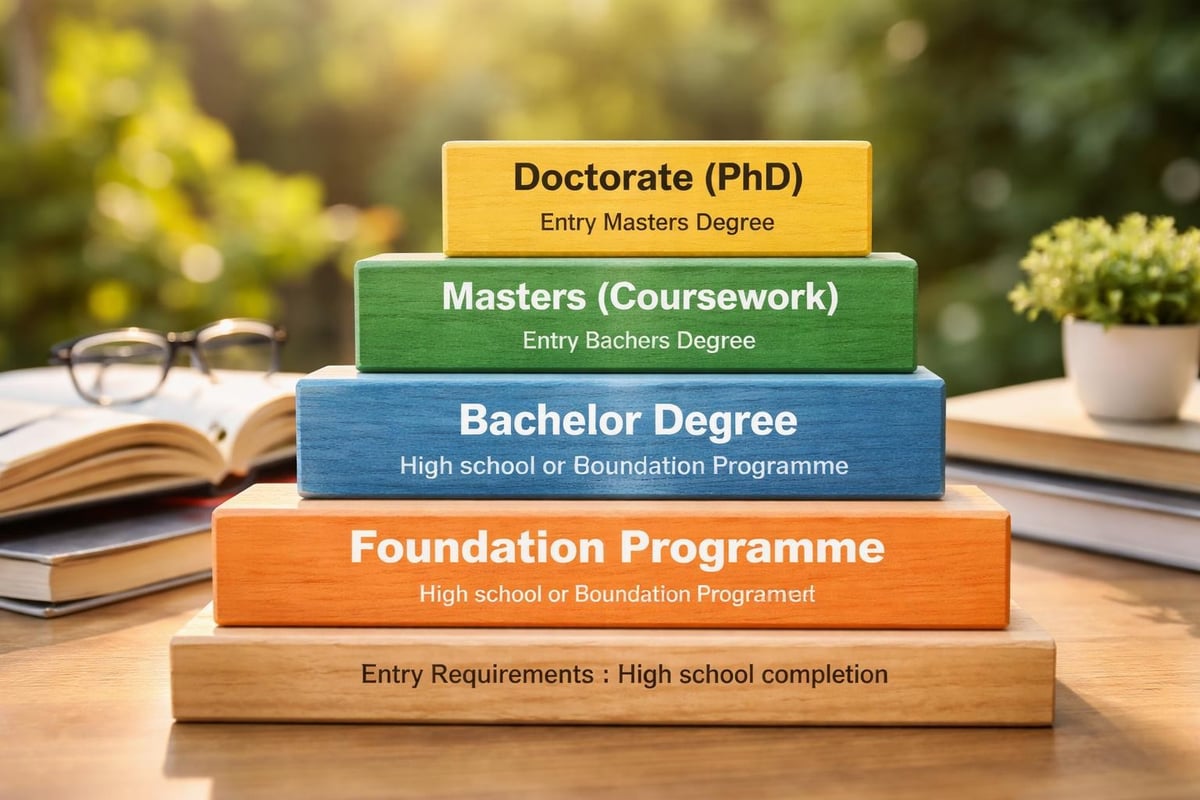
Undergraduate programmes typically require completion of Year 12 or international equivalent qualifications. Foundation programmes and diploma pathways offer alternative entry routes for students who don't meet direct entry requirements.
Postgraduate coursework demands a bachelor's degree in a relevant field, whilst research degrees require demonstrated research capability and a detailed proposal. Some professional master's programmes may also require relevant work experience.
Essential Requirements for Admission in Australia
Meeting admission requirements represents the foundational step in your Australian education journey. Universities assess applications holistically, considering multiple factors beyond academic transcripts.
Academic Qualifications
International students must demonstrate educational qualifications equivalent to Australian standards. The admission entry requirements vary significantly between institutions and programmes.
- High school completion with satisfactory grades (typically 65-85% depending on university ranking)
- Bachelor's degree for postgraduate programmes with minimum GPA requirements (usually 5.0-6.5 on a 7-point scale)
- Subject prerequisites for specific courses such as mathematics for engineering or science for medicine
- Portfolio or audition requirements for creative arts programmes
Academic transcripts must be officially translated into English and certified by authorized bodies. Some universities accept online credential verification services, whilst others require physical documents.
English Language Proficiency
Demonstrating English proficiency is mandatory for admission in Australia. Universities accept various standardized tests, each with specific score requirements.
| Test Type | Typical Minimum Score | Notes |
|---|---|---|
| IELTS Academic | 6.5 overall (6.0 bands) | Most widely accepted |
| TOEFL iBT | 79-94 | Popular in Asia |
| PTE Academic | 58-65 | Computer-based testing |
| Cambridge Advanced | 176-185 | British system preference |
Higher-ranked universities and competitive programmes often demand scores above these minimums. Medical, law, and education programmes typically require IELTS 7.0 or equivalent due to professional communication requirements.
Strategic Application Timeline
Successful admission in Australia requires careful planning and adherence to critical deadlines. Australian universities typically have two main intake periods, though application timelines differ by institution.
Semester 1 Intake (February/March Start)
August-September (previous year): Research programmes, shortlist universities, and prepare required documents including transcripts, references, and personal statements.
September-November: Submit applications through university portals or centralized systems. Some states use specialized admission platforms for streamlined processing.
December-January: Receive conditional or unconditional offers, accept your preferred offer, and pay initial deposits to secure your place.
January-February: Apply for student visa (subclass 500), arrange accommodation, and prepare for departure.
Semester 2 Intake (July/August Start)
This secondary intake follows a similar pattern but compressed into shorter timeframes. Applications typically open in February with decisions by May. Not all programmes offer mid-year entry, particularly research degrees and highly specialized courses.

Required Documentation Checklist
Comprehensive documentation strengthens your application and accelerates processing times. Missing or incomplete documents represent the primary cause of application delays.
Academic Documents
- Certified copies of all academic transcripts and certificates
- Graduation certificates or proof of pending completion
- Academic reference letters from teachers or professors (typically 2-3 letters)
- Detailed course syllabi for credit transfer applications
- Professional certifications relevant to your chosen field
Supporting Materials
- Valid passport copy (minimum 6 months validity)
- Recent passport-sized photographs
- Statement of Purpose explaining academic goals and career aspirations
- Curriculum Vitae highlighting achievements and experiences
- Portfolio, research proposal, or audition materials (programme-specific)
- Evidence of English proficiency test results
Financial documents proving capacity to cover tuition fees and living expenses strengthen visa applications but aren't typically required during the admission stage.
Understanding Entry Pathways
Australia offers multiple pathways to university admission, accommodating diverse educational backgrounds and preparation levels. These alternative routes provide opportunities for students who may not meet direct entry requirements.
Foundation Programmes
Foundation programmes bridge the gap between international secondary education and Australian undergraduate study. These intensive one-year programmes cover academic subjects and English language development whilst acculturating students to Australian educational methods.
Foundation completion typically guarantees progression to partner university bachelor programmes, provided students achieve specified grades. This pathway particularly benefits students from educational systems significantly different from the Australian curriculum.
Diploma and Advanced Diploma Routes
Vocational diplomas offer practical, industry-focused education that articulates into second-year university programmes. Students complete 1-2 years of diploma study before transferring to partner universities with advanced standing.
This pathway reduces overall study duration and costs whilst providing practical skills valued by employers. Engineering, business, and information technology programmes commonly utilize diploma pathways.
Financial Planning for Australian Education
Understanding admission costs and financial requirements enables realistic budgeting and prevents financial obstacles during your application journey.
Tuition Fee Structure
| Programme Level | Annual Tuition Range (AUD) |
|---|---|
| Foundation | $18,000 – $32,000 |
| Undergraduate | $20,000 – $45,000 |
| Postgraduate Coursework | $22,000 – $50,000 |
| Doctoral Research | $18,000 – $42,000 |
Premium programmes including medicine, veterinary science, and MBA degrees command higher fees, often exceeding $60,000 annually. Living costs add approximately $21,000-$25,000 per year depending on city location.
Scholarship Opportunities
Australian universities offer merit-based scholarships specifically for international students. Government programmes including Australia Awards and Research Training Programme (RTP) scholarships provide full or partial funding.
Scholarship applications typically require separate submissions with additional essays, reference letters, and evidence of academic excellence or leadership. Early application significantly improves scholarship success rates.
Professional study abroad consultancy services help students identify and secure appropriate scholarships. The Study Abroad and Overseas Education Consultancy team provides expert guidance on scholarship applications, helping students access financial support that makes Australian education more affordable whilst navigating the complex admission landscape.

Navigating University Selection
Choosing the right university significantly impacts your educational experience and career prospects. Strategic selection considers multiple factors beyond university rankings.
Institutional Reputation and Recognition
The Group of Eight universities (Australian National University, University of Melbourne, University of Sydney, University of Queensland, University of Western Australia, University of Adelaide, Monash University, and UNSW Sydney) represent Australia's research-intensive institutions with strong international reputations.
However, newer universities often excel in specific disciplines, offer innovative teaching approaches, and provide closer industry connections. The University of Adelaide’s entry requirements exemplify transparent admission standards that help students assess their competitiveness.
Location Considerations
Metropolitan universities in Sydney, Melbourne, and Brisbane offer diverse cultural experiences, extensive employment opportunities, and comprehensive student support services. However, living costs in major cities substantially exceed regional areas.
Regional universities provide more affordable living, smaller class sizes, and access to additional visa benefits including extended post-study work rights and regional sponsorship pathways. Regional admission in Australia often features slightly lower entry requirements whilst maintaining educational quality.
Programme Specialization
Research programme-specific rankings, accreditation status, and industry partnerships rather than relying solely on overall university rankings. Some universities excel in particular fields such as marine biology, mining engineering, or tourism management.
The Application Submission Process
Successfully navigating the application process requires attention to detail and systematic approach. Most universities accept direct applications through institutional portals, though some states operate centralized systems.
Online Application Platforms
Create accounts on university application portals and complete all sections thoroughly. Inconsistent information across different application sections raises red flags for admission officers.
Personal details must match passport information exactly to prevent visa complications later. Academic history requires listing all educational institutions attended, even if qualifications weren't completed.
Programme selection allows multiple choices at some institutions. List programmes in preference order, as universities typically assess applications for first-choice programmes before considering alternatives.
Supporting Statement Quality
Personal statements differentiate candidates with similar academic profiles. Effective statements demonstrate:
- Specific reasons for choosing particular programmes and universities
- Clear connection between past experiences and future goals
- Understanding of programme content and career applications
- Genuine enthusiasm for subject matter and research areas
- Cultural awareness and readiness for international study
Avoid generic statements applicable to any programme. Reference specific units, research groups, facilities, or academics that attracted you to particular universities.

Assessment and Offer Management
Understanding how universities evaluate applications helps set realistic expectations and enables strategic decision-making when multiple offers arrive.
Evaluation Criteria
Admission officers assess applications against multiple criteria weighted according to programme requirements and institutional priorities. Academic performance typically represents 60-70% of the evaluation, with English proficiency, relevant experience, and supporting statements comprising the remainder.
Competitive programmes receive substantially more applications than available places. Medicine, law, and architecture programmes may have acceptance rates below 10%, whilst other programmes accept the majority of qualified applicants.
Rolling admissions processes evaluate applications as received, making early submission advantageous. Fixed deadline programmes assess all applications after closing dates, giving no advantage to early submission beyond reduced stress.
Offer Types and Responses
Unconditional offers confirm admission provided you accept and pay required deposits by specified deadlines. These offers indicate you've met all academic and English requirements.
Conditional offers specify outstanding requirements such as completing your current qualification with minimum grades, achieving specified English test scores, or submitting additional documents. Meeting conditions converts offers to unconditional status.
Universities typically provide 2-4 weeks to accept offers, though extension requests are often granted. Accept one offer firmly whilst maintaining others as backups until visa approval and final enrollment.
Post-Admission Requirements
Receiving an offer represents a significant milestone, but several critical steps remain before commencing your Australian education journey.
Confirmation of Enrolment (CoE)
The Confirmation of Enrolment document proves university acceptance and enables student visa applications. Universities issue CoEs after receiving:
- Signed offer acceptance
- Initial tuition fee payment (typically one semester or year)
- Overseas Student Health Cover (OSHC) arrangement
- Completed enrolment forms with course selections
Retain CoE documents carefully as they're essential for visa applications and airport immigration processing.
Visa Application Process
Australia's student visa (subclass 500) allows full-time study at registered institutions. Applications require:
- Valid CoE from your university
- Genuine Temporary Entrant (GTE) statement explaining study intentions
- Financial capacity evidence showing funds for tuition and living costs
- English proficiency proof (may differ from university requirements)
- Health examination and police clearances from countries of residence
Processing times vary from 4-8 weeks depending on nationality and application complexity. Submit visa applications promptly after receiving CoE to ensure approval before semester commencement.
Pre-Departure Preparation
Accommodation arrangements should commence immediately after accepting offers. University residential colleges fill quickly, whilst private rental markets in major cities are highly competitive. Early organization prevents last-minute stress and expensive temporary accommodation.
Airport reception and orientation programmes help international students transition smoothly. Most universities offer airport pickup services and comprehensive orientation covering academic expectations, city navigation, and support services.
Securing admission in Australia represents an achievable goal with proper preparation, strategic planning, and comprehensive understanding of requirements and processes. From researching suitable programmes through navigating application systems to managing visa requirements, each step demands attention to detail and timely action. The rewards of Australian education-world-class teaching, multicultural experiences, and strong career prospects-justify the effort invested in the admission journey. SBUB Group Ltd. specializes in guiding students through every stage of the admission process, from university selection and application preparation to scholarship assistance and visa support, ensuring you secure your place at the Australian institution that best matches your academic goals and career aspirations.