
US Schools for International Students: Complete Guide
The United States remains one of the most sought-after destinations for international students pursuing quality education, offering world-renowned universities, diverse academic programs, and unparalleled research opportunities. Understanding the landscape of us schools for international students requires careful navigation of admission requirements, visa processes, financial considerations, and cultural adjustments. This comprehensive guide provides essential insights into selecting and succeeding at American educational institutions, whether you're considering secondary schools, undergraduate programs, or postgraduate studies.
Understanding the US Education System Structure
The American education system differs significantly from models in other countries, which can initially confuse prospective international students. The structure comprises primary education (elementary school), secondary education (middle and high school), and tertiary education (colleges and universities). For international students, the most relevant segments are typically secondary and tertiary institutions.
Secondary School Options
American secondary schools welcome international students through various pathways. Private boarding schools, day schools, and specialized international programs provide rigorous academic curricula alongside extracurricular opportunities. Organizations like ASSIST facilitate merit-based placements for talented international students in American independent secondary schools.
Popular secondary school categories include:
- Private boarding schools with residential facilities
- International schools following American curricula
- Public schools through designated exchange programs
- Specialized academies focusing on STEM, arts, or languages
- Online schools such as those offering flexible American curricula
International students attending us schools for international students at the secondary level benefit from early exposure to American educational methodologies, improving their preparation for university admission. The experience helps students develop English proficiency, understand grading systems, and adapt to classroom expectations that differ from their home countries.

Tertiary Education: Universities and Colleges
Higher education institutions in America fall into several categories, each offering distinct advantages. Understanding these differences helps international students identify schools aligned with their academic goals, career aspirations, and budget constraints.
| Institution Type | Characteristics | Typical Duration | Best For |
|---|---|---|---|
| Research Universities | Extensive research programs, doctoral degrees, large campuses | 4 years (undergraduate) | Students seeking research opportunities |
| Liberal Arts Colleges | Focus on undergraduate education, small class sizes | 4 years | Students valuing personalized attention |
| Community Colleges | Two-year associate degrees, pathway to universities | 2 years | Cost-conscious students, transfer pathways |
| Technical Institutes | Career-focused programs, practical skills | 2-4 years | Students pursuing specific vocational training |
Research universities typically offer the broadest range of programs and attract the largest international student populations. These institutions provide cutting-edge facilities, renowned faculty, and extensive networking opportunities. Liberal arts colleges emphasize critical thinking, writing, and broad-based education across disciplines.
The Community College Transfer Pathway
Community colleges represent an increasingly popular route for international students. These two-year institutions offer affordable tuition, smaller class sizes, and articulation agreements with four-year universities. Students can complete general education requirements at community colleges before transferring to prestigious universities for their final two years, ultimately earning a bachelor's degree from the four-year institution.
This pathway reduces overall education costs whilst maintaining access to quality American credentials. Many community colleges provide dedicated support services for international students, including English language programs, academic advising, and cultural integration assistance.
Application Requirements and Processes
Navigating application requirements for us schools for international students demands careful attention to deadlines, documentation, and standardized testing. Each institution sets unique admission criteria, though common elements exist across most American schools.
Standard application components include:
- Completed application form (Common Application, Coalition Application, or institution-specific)
- Academic transcripts with certified English translations
- Standardized test scores (SAT, ACT for undergraduates; GRE, GMAT for postgraduates)
- English proficiency tests (TOEFL, IELTS, Duolingo English Test)
- Letters of recommendation from teachers or professors
- Personal statement or essay responses
- Financial documentation demonstrating ability to fund education
- Portfolio or audition materials (for arts programs)
The EducationUSA platform provides comprehensive guidance on application procedures, standardized testing, and understanding American higher education expectations. This official resource helps students navigate the complexity of applying to multiple institutions simultaneously.
Timeline Considerations
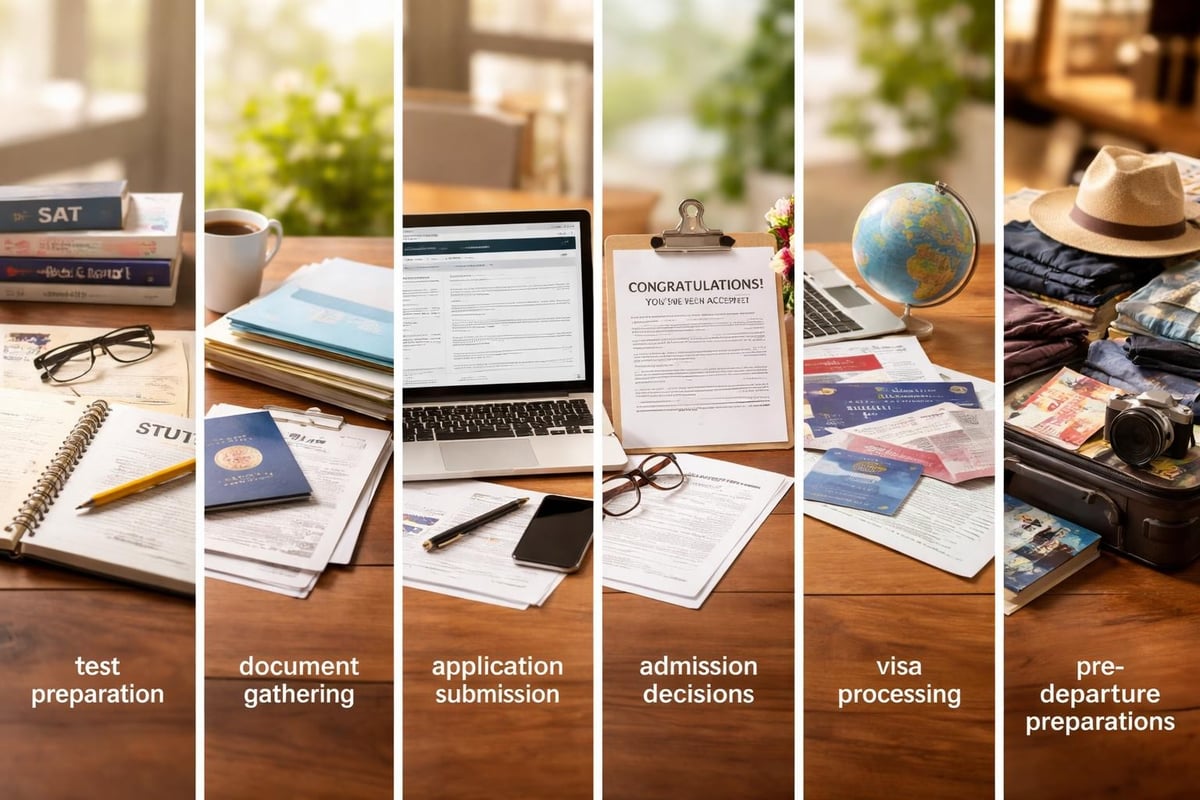
Most American universities operate on rolling, early decision, early action, or regular decision timelines. Early decision applications typically close in November with binding commitments, whilst regular decision deadlines often fall between December and February. International students should begin preparing applications at least 12-18 months before intended enrollment to accommodate testing schedules, document preparation, and visa processing.
Graduate program deadlines vary considerably by field. STEM programs may accept applications until spring for autumn enrollment, whilst competitive business or law programs often require applications by late autumn or early winter.
Visa Requirements and Immigration Compliance
Securing appropriate student visa status represents a critical step for international students. The F-1 visa serves as the primary classification for academic students attending us schools for international students, whilst M-1 visas apply to vocational or non-academic programs.
F-1 Visa Application Process
After receiving acceptance from a Student and Exchange Visitor Program (SEVP)-certified school, students receive Form I-20, which certifies enrollment and financial capacity. This document is essential for visa application. The process involves completing the DS-160 online form, paying the SEVIS I-901 fee, scheduling and attending a visa interview at a U.S. embassy or consulate, and providing supporting documentation.
Required documentation typically includes:
- Valid passport with at least six months validity
- Form I-20 from accepting institution
- DS-160 confirmation page
- Visa application fee payment receipt
- SEVIS fee payment confirmation
- Academic transcripts and test scores
- Financial evidence (bank statements, scholarship letters, sponsor affidavits)
- Proof of ties to home country
Visa interviews focus on academic intentions, financial capacity, and plans to return home after completing studies. Students should prepare to articulate their academic goals, explain their program choice, and demonstrate sufficient funding sources.
Maintaining Legal Status
Once in the United States, international students must maintain full-time enrollment, make satisfactory academic progress, and comply with employment restrictions. F-1 students can work on-campus up to 20 hours weekly during academic terms and full-time during breaks. Off-campus employment requires special authorization through Curricular Practical Training (CPT) or Optional Practical Training (OPT).
Students must report address changes, maintain valid immigration documents, and receive approval before traveling outside the United States. Designated School Officials (DSOs) at each institution help students navigate these requirements and maintain compliance throughout their studies.
Financial Planning and Scholarship Opportunities
Tuition and living expenses at us schools for international students vary dramatically based on institution type, location, and program level. Public universities typically charge international students out-of-state tuition rates, whilst private institutions apply uniform tuition regardless of residency. Annual costs range from $20,000 at community colleges to over $80,000 at prestigious private universities when including accommodation, meals, books, and personal expenses.
| Expense Category | Annual Range (USD) | Notes |
|---|---|---|
| Tuition & Fees | $20,000 – $60,000 | Varies by institution type and program |
| Accommodation | $8,000 – $18,000 | On-campus housing typically required first year |
| Meals | $4,000 – $8,000 | Meal plans or independent food costs |
| Books & Supplies | $1,000 – $2,000 | Digital resources reducing costs |
| Health Insurance | $2,000 – $4,000 | Mandatory at most institutions |
| Personal Expenses | $2,000 – $4,000 | Transportation, clothing, entertainment |
Funding Sources and Scholarships
International students should explore multiple funding avenues when planning their American education. Merit-based scholarships, need-based aid, athletic scholarships, and departmental awards provide opportunities to reduce costs, though competition remains fierce.
Many universities offer automatic scholarships based on admission credentials, whilst others require separate scholarship applications. Professional study abroad consultancies help students identify and apply for relevant funding opportunities that might otherwise remain undiscovered.
Graduate students often receive funding through research assistantships, teaching assistantships, or fellowships that cover tuition and provide stipends. These positions integrate students into academic departments whilst developing professional skills valuable for future careers.
For students seeking comprehensive support throughout the application and enrollment process, specialized guidance can make a significant difference in securing admissions and scholarships. Study abroad consultancy services provide expert assistance with university selection, application strategy, scholarship identification, and visa guidance across multiple countries including the United States.
Choosing the Right School: Key Considerations
Selecting appropriate us schools for international students requires balancing academic fit, financial feasibility, location preferences, and career objectives. Rather than focusing solely on institutional rankings, students should evaluate multiple factors affecting their overall experience and success.
Academic Program Strength
Research specific program rankings, faculty expertise, research opportunities, and curriculum structure within intended fields of study. A university with strong overall reputation may not excel in every department. Review faculty publications, examine course catalogues, and investigate internship or research opportunities available to students.
Questions to consider:
- Does the program offer concentrations or specializations aligned with career goals?
- What research facilities and resources support student work?
- How do class sizes affect student-faculty interaction?
- What percentage of international students succeed in the program?
- Are industry partnerships or practicum opportunities available?
Location and Campus Environment
Geographic location significantly impacts student experience, living costs, and career opportunities. Urban campuses provide diverse cultural experiences, internship access, and extensive public transportation, but often at higher living costs. Rural or suburban campuses may offer closer-knit communities, lower expenses, and more traditional college experiences.
Climate considerations matter for students from tropical regions who may struggle with harsh winters, whilst those from colder climates might find southern heat challenging. Proximity to international airports facilitates travel home during breaks.
The presence of established international student communities can ease cultural transitions. Resources available through the Educator’s Reference Desk help students evaluate support services, cultural organizations, and integration programs at different institutions.

Support Services for International Students
Reputable us schools for international students provide comprehensive support services addressing academic, cultural, and practical needs. These resources significantly impact student success and overall satisfaction during American studies.
International Student Offices
Dedicated international student services offices coordinate immigration advising, orientation programs, cultural adjustment workshops, and social events. Staff members help students navigate visa regulations, understand academic expectations, and connect with campus resources. Many offices organize airport pickup services, temporary housing assistance, and mentorship programs pairing new international students with experienced peers.
Academic Support Resources
Writing centers, tutoring services, supplemental instruction programs, and academic coaching help international students succeed in rigorous American coursework. Many institutions offer specific support for non-native English speakers, including conversation partners, academic English courses, and discipline-specific writing assistance.
Career services departments provide resume preparation, interview coaching, networking events, and employer connections. International students benefit from specialized guidance on work authorization options, international job searches, and leveraging their global perspectives in competitive job markets.
- Health and Wellness Services: Campus health centers, counseling services, and wellness programs address physical and mental health needs
- Housing Assistance: Residence life staff support on-campus living, whilst off-campus housing offices help students find safe, affordable accommodation
- Cultural Organizations: Student clubs celebrating diverse cultures, religions, and nationalities create community and belonging
- Financial Aid Advising: Specialized staff help international students manage finances, understand payment systems, and identify emergency funding
Cultural Adjustment and Integration
Adapting to American academic culture represents one of the most significant challenges facing international students. Classroom participation expectations, academic integrity standards, and communication styles often differ substantially from educational norms in students' home countries.
Academic Culture Differences
American education emphasizes critical thinking, class participation, group projects, and independent research. Professors expect students to question assumptions, engage in discussions, and develop original arguments rather than memorizing and reciting information. This approach can feel uncomfortable for students from educational systems prioritizing respect for authority and established knowledge.
Key cultural adjustments include:
- Active class participation contributes to grades in most courses
- Deadlines are strictly enforced with late penalties
- Academic integrity violations carry serious consequences
- Collaborative work is common but plagiarism is strictly prohibited
- Office hours provide opportunities for individual faculty interaction
- Informal communication with professors is acceptable and encouraged
Social Integration Strategies
Building diverse friendships enhances cultural understanding whilst maintaining connections with home country peers provides emotional support. International students often find balance between cultural preservation and adaptation, participating in both international student organizations and broader campus activities.
Attending campus events, joining clubs related to interests or hobbies, participating in recreational sports, and volunteering in local communities facilitate social integration. Many successful international students report that stepping outside comfort zones to initiate conversations and try new activities significantly improved their American experience.
For detailed insights and guidance throughout your educational journey, exploring additional resources through SBUB Group’s blog provides valuable information on studying abroad successfully.
Employment Opportunities During and After Studies
Understanding work authorization options helps international students at us schools for international students gain practical experience, supplement finances, and build professional networks valuable for post-graduation careers.
On-Campus Employment
F-1 students may work on-campus up to 20 hours weekly during academic terms without additional authorization. Positions include library assistants, dining hall workers, resident advisors, department assistants, and research support roles. These jobs provide income whilst keeping students engaged with campus life and developing professional skills.
Graduate students often secure teaching or research assistantships within their departments, receiving tuition waivers and stipends in exchange for instructional or research responsibilities. These positions provide crucial experience for academic or research careers whilst significantly reducing education costs.
Curricular and Optional Practical Training
Curricular Practical Training (CPT) allows students to participate in internships, cooperative education, or practicum experiences integral to their academic programs. Students must complete at least one academic year before qualifying for CPT, and positions must relate directly to their field of study.
Optional Practical Training (OPT) permits students to work in positions directly related to their field of study for up to 12 months after completing degrees. STEM graduates may qualify for an additional 24-month extension, providing total OPT authorization of 36 months. This post-completion work authorization allows international students to gain valuable American work experience before returning home or pursuing additional immigration options.
| Work Authorization Type | When Available | Duration | Restrictions |
|---|---|---|---|
| On-Campus Employment | Immediately upon enrollment | Continuous, part-time during term | Must be enrolled full-time |
| CPT | After one academic year | Varies by program | Must be integral to curriculum |
| Pre-Completion OPT | After one academic year | Up to 12 months total (combined with post-completion) | Part-time during term, full-time during breaks |
| Post-Completion OPT | After program completion | 12 months (36 months for STEM) | Full-time, must be in field of study |
Health Insurance and Healthcare Systems
Navigating American healthcare systems presents unique challenges for international students accustomed to different medical service delivery models. Most us schools for international students require comprehensive health insurance coverage, either through university-sponsored plans or approved alternative policies.
University Health Insurance Plans
Institution-sponsored health insurance plans typically provide comprehensive coverage including preventive care, emergency services, prescription medications, mental health services, and specialist consultations. These plans understand student needs and coordinate with campus health centers, simplifying access to care.
Costs vary from $2,000 to $4,000 annually depending on coverage levels and institution. Students should carefully review coverage details, understanding copayments, deductibles, network restrictions, and exclusions. Some universities allow waivers if students demonstrate equivalent coverage through private insurance, though international plans rarely meet American university requirements.
Accessing Healthcare Services
Campus health centers provide primary care, urgent care, mental health counseling, and health education services. International students should register with campus health services early in their first semester, establishing medical records and understanding available resources.
For emergencies, calling 911 connects to emergency services, though emergency room visits incur substantial costs even with insurance. Understanding when to use urgent care versus emergency services helps students access appropriate care efficiently whilst managing costs.
Mental health support is increasingly recognized as essential for student success. Counseling centers offer individual therapy, group counseling, crisis intervention, and referrals to specialized providers. International students face unique stressors including cultural adjustment, language barriers, and separation from support networks, making these services particularly valuable.
Academic Performance Expectations and Strategies
Success at us schools for international students requires understanding academic expectations, developing effective study strategies, and utilizing available resources proactively. American grading systems, academic integrity standards, and classroom participation norms differ significantly from many international education systems.
Understanding Grading Systems
Most American universities use a 4.0 grade point average (GPA) scale where A grades equal 4.0, B grades equal 3.0, C grades equal 2.0, and D grades equal 1.0. F grades represent failure without credit. Many institutions use plus/minus modifiers (A-, B+, etc.) that slightly adjust grade point values.
Common GPA interpretations:
- 3.5-4.0: Dean's List, honors recognition, competitive for graduate programs
- 3.0-3.49: Good academic standing, eligible for most opportunities
- 2.5-2.99: Satisfactory performance, may face restrictions
- 2.0-2.49: Academic warning or probation at many institutions
- Below 2.0: Serious academic difficulty, risk of dismissal
International students must maintain specific GPA thresholds to preserve scholarships, remain eligible for academic programs, and maintain visa compliance. Understanding grade calculation early prevents surprises and allows students to seek support promptly if struggling.
Effective Study Strategies
Time management challenges many international students adjusting to rigorous American coursework expectations. Unlike systems where final examinations determine entire grades, American courses typically assess students through multiple assignments, quizzes, midterm examinations, projects, presentations, and participation.
Successful students develop regular study schedules, preview materials before classes, review notes afterwards, and seek clarification promptly when confused. Forming study groups with classmates creates accountability whilst exposing students to different perspectives and problem-solving approaches.
Academic support services including writing centers, tutoring programs, and supplemental instruction sessions provide free assistance. International students should overcome hesitation about seeking help, recognizing that successful students utilize these resources regularly rather than viewing them as remedial services.
Technology and Digital Resources for Students
Modern us schools for international students leverage extensive technology infrastructure supporting academic work, communication, and campus life. Understanding available digital resources helps students maximize educational opportunities and stay connected with home.
Learning Management Systems
Universities utilize platforms like Canvas, Blackboard, or Moodle for course delivery, assignment submission, grade tracking, and instructor communication. Students access syllabi, lecture materials, discussion forums, and announcements through these systems. Mastering these platforms quickly ensures students never miss important deadlines or course updates.
Digital libraries provide access to millions of scholarly articles, e-books, databases, and research resources. International students can access these materials remotely, supporting research projects and academic writing. Librarians offer specialized research consultations helping students identify authoritative sources and develop search strategies.
Communication and Connectivity
University email accounts serve as official communication channels requiring regular monitoring. Important announcements regarding registration, financial aid, campus safety, and academic deadlines arrive via email. Students should check university email daily and set up smartphone notifications for timely responses.
Video conferencing tools facilitate virtual office hours, group project meetings, and connections with family abroad. Many universities provide enterprise licenses for platforms like Zoom, Microsoft Teams, or Google Meet, supporting synchronous remote collaboration.
Social media and messaging applications help international students maintain home country connections whilst building American friendships. However, students should understand digital footprint implications, recognizing that employers and graduate programs increasingly review applicants' online presence.
Housing Options and Living Arrangements
Accommodation decisions significantly impact international student experiences at us schools for international students. Most institutions require first-year students to live in campus housing, providing structured community support during initial adjustment periods.
On-Campus Housing
Residence halls offer varying amenities from traditional shared rooms with communal bathrooms to apartment-style suites with private bedrooms and kitchens. Living on campus provides proximity to classes, dining facilities, libraries, and campus events whilst fostering community connections.
Resident advisors support community development, enforce policies, and connect students with campus resources. Many universities designate international student housing wings or floors, creating built-in peer networks sharing similar experiences. However, some students prefer diverse housing assignments promoting cultural exchange with American peers.
Off-Campus Alternatives
After fulfilling on-campus residence requirements, many students move to off-campus apartments, seeking independence, reduced costs, or different living arrangements. Off-campus housing requires understanding leasing agreements, utilities setup, renter's insurance, and tenant rights unfamiliar to many international students.
Proximity to campus, public transportation access, neighborhood safety, and shopping convenience factor into location decisions. Universities often maintain off-campus housing offices helping students identify reputable landlords, understand typical rent ranges, and navigate rental processes.
Sharing apartments with roommates reduces costs whilst providing companionship. International students should establish clear expectations regarding shared expenses, household responsibilities, guest policies, and noise levels preventing conflicts.
Navigating us schools for international students successfully requires thorough preparation, cultural adaptability, and strategic resource utilization throughout your educational journey. From understanding the diverse institutional landscape to mastering visa requirements, financial planning, and academic expectations, informed decision-making at each stage enhances your American education experience. Whether you're considering secondary schools, undergraduate programs, or postgraduate studies, SBUB Group Ltd. provides comprehensive support including university selection, application assistance, scholarship identification, visa guidance, and accommodation arrangements, helping you transform your study abroad aspirations into academic achievement and career success.