
Study Abroad Without IELTS: Complete Guide 2026
The dream of pursuing international education often feels out of reach for students who struggle with standardised English proficiency tests. However, the landscape of abroad study without IELTS has transformed dramatically, with universities and countries worldwide recognising diverse methods to demonstrate English language competence. Whether you're concerned about test anxiety, timing constraints, or simply prefer alternative assessment methods, numerous pathways now exist to achieve your academic aspirations overseas.
Understanding the IELTS Alternative Landscape
The International English Language Testing System (IELTS) has long dominated the English proficiency assessment space, yet it's no longer the sole gateway to international education. Universities across multiple continents have begun accepting alternative credentials, recognising that language ability can be demonstrated through various means.
Medium of instruction (MOI) certificates represent one of the most straightforward alternatives. If you've completed your previous education entirely in English, many institutions will waive standardised testing requirements. This documentation, issued by your school or university, confirms that your coursework was delivered in English.
Alternative standardised tests have gained significant traction. The Duolingo English Test has emerged as a popular choice due to its accessibility, affordability, and convenience. Similarly, the Pearson Test of English (PTE) and TOEFL offer recognised alternatives that many students find more approachable.
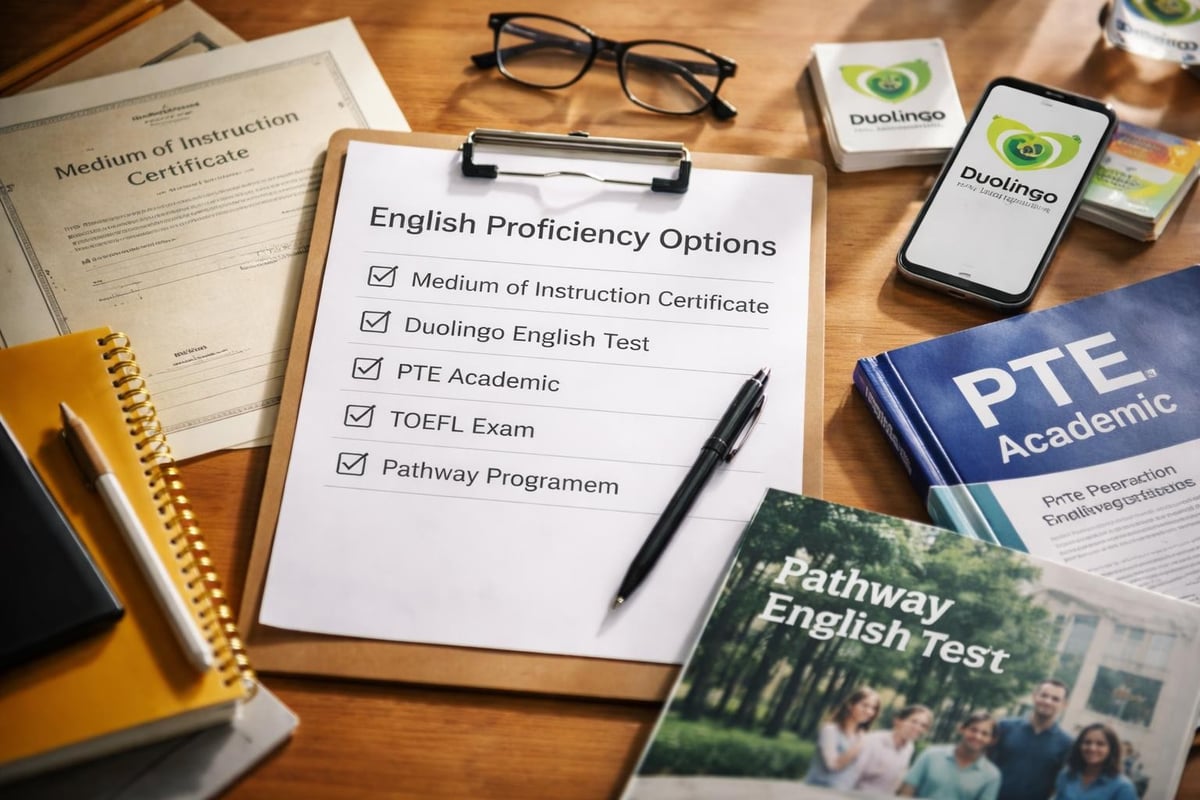
Alternative English Proficiency Tests
| Test Name | Duration | Approximate Cost | Results Timeline | Acceptance Rate |
|---|---|---|---|---|
| Duolingo English Test | 1 hour | £49 | 48 hours | Growing rapidly |
| PTE Academic | 2 hours | £145-£165 | 48 hours | Widely accepted |
| TOEFL iBT | 3 hours | £170-£190 | 6 days | Highly established |
| Cambridge English | 3.5 hours | £150-£180 | 2-3 weeks | Traditional acceptance |
Each assessment carries distinct advantages. Duolingo's affordability and rapid turnaround make it particularly attractive for students on tight schedules or budgets. The PTE's computer-based format eliminates human bias in speaking assessments, whilst TOEFL's long-standing reputation continues to reassure traditional institutions.
Countries Offering Study Opportunities Without IELTS
North America: United States and Canada
The United States hosts thousands of universities, many of which offer flexible English proficiency requirements. Institutions frequently accept Duolingo, PTE, and TOEFL as alternatives. Additionally, community colleges and pathway programmes provide entry points for students who can demonstrate English competency through conditional admission structures.
Canadian universities similarly embrace alternatives to IELTS. Provinces like Ontario and British Columbia house institutions that accept MOI certificates from students who completed secondary or tertiary education in English-medium schools. Some universities conduct their own internal English assessments during the admission process.
- University-specific waivers: Submit proof of English-medium education
- Pathway programmes: Complete pre-degree English courses
- Alternative tests: Present Duolingo or PTE scores
- Internal assessments: Participate in university-designed evaluations
Europe: Germany, France, and Beyond
Germany stands out for its tuition-free education model at public universities, and many institutions permit abroad study without IELTS through alternative documentation. Technical universities (Technische Universität) often accept proof of English-medium bachelor's degrees for master's programmes. Some institutions offer their own language assessment tests administered during the application process.
France welcomes international students through programmes taught in English, particularly at business schools and grandes écoles. Students may demonstrate proficiency through previous academic transcripts, interviews conducted in English, or recognised alternative tests. Countries like Germany and France increasingly accommodate diverse proof of language ability, recognising the global nature of English education.
Norway, Sweden, and the Netherlands present additional opportunities. Nordic universities frequently waive English testing for students from predominantly English-speaking educational backgrounds. The focus shifts to academic merit and programme-specific prerequisites rather than standardised language scores.
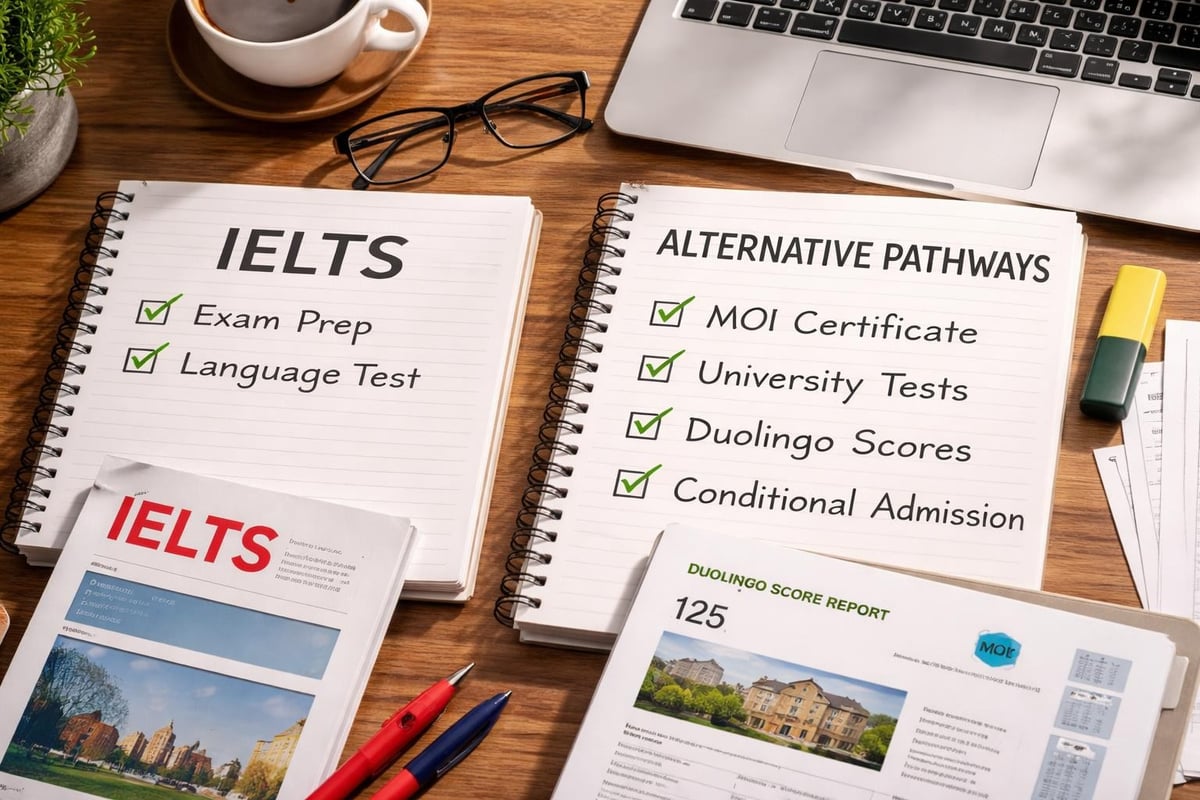
Asia-Pacific: Australia, New Zealand, and Malaysia
Australian universities maintain high academic standards whilst offering flexibility in English proficiency demonstration. The Study in Australia pathway includes options for students with strong English-medium academic backgrounds. Universities may waive IELTS for applicants who completed substantial education in English or achieved high grades in English subjects.
New Zealand institutions mirror Australian practices, with additional consideration for Pacific Island students and those from Commonwealth countries with English education systems. The New Zealand study experience combines quality education with pragmatic admission policies that recognise diverse educational backgrounds.
Malaysia has positioned itself as an education hub offering affordable, quality programmes. Universities here routinely accept students without IELTS if they possess MOI certificates or achieve specific grades in English during their previous qualifications. Private universities particularly embrace this flexibility to attract international talent.
University-Specific Pathways and Internal Assessments
Conditional Admission Programmes
Conditional admission represents a strategic approach where universities offer provisional acceptance pending English proficiency development. Students receive admission to their desired programme but must first complete an intensive English language course, typically lasting one semester to one year.
These programmes benefit students who demonstrate strong academic credentials but need additional language support. The structure provides:
- Direct pathway: Guaranteed programme entry upon completion
- Campus immersion: Familiarisation with university facilities and culture
- Academic English focus: Specialised vocabulary and writing skills
- Peer networking: Early connection with international student community
- Seamless transition: No reapplication required after language completion
University Internal Language Tests
Numerous institutions have developed proprietary English assessments tailored to their academic requirements. These internal tests evaluate reading comprehension, written expression, listening skills, and speaking ability within contexts relevant to university study.
The advantages include cost savings, convenience, and alignment with specific programme demands. Students complete these assessments as part of the application process, either online or during campus visits. Results immediately inform admission decisions without waiting for external test dates or results.
Proof of Previous English-Medium Education
Documentation of English-medium instruction provides compelling evidence of language proficiency. Students who completed secondary school, undergraduate degrees, or professional qualifications entirely in English can often bypass standardised testing.
Required documentation typically includes:
- Official transcripts showing English as the language of instruction
- Medium of Instruction certificate from the institution registrar
- Course syllabi demonstrating English-language textbooks and materials
- Graduation certificates from recognised English-medium institutions
The strength of this approach lies in demonstrating sustained English usage across years of academic work. Universities recognise that successfully completing rigorous coursework in English indicates practical language competence exceeding what short standardised tests measure.
Commonwealth and English-Speaking Nations
Students from countries where English serves as an official language often receive automatic exemptions. Nations like India, Pakistan, Nigeria, and Kenya frequently qualify for waivers based on their educational systems' English integration. However, requirements vary by institution, making thorough research essential.
Scholarship Opportunities for Non-IELTS Applicants
Financial support remains accessible for students pursuing abroad study without IELTS. Merit-based scholarships focus on academic achievement, leadership potential, and programme fit rather than specific test scores. Universities offering IELTS alternatives typically extend the same scholarship consideration to applicants using alternative proficiency proof.
Government-funded scholarships from destination countries increasingly accommodate diverse English proficiency documentation. The Chevening Scholarship (UK), DAAD scholarships (Germany), and Australian Awards all consider MOI certificates and alternative tests within their eligibility frameworks.
Private foundations and corporate sponsors prioritise academic excellence and potential impact over standardised test performance. Students should explore:
- University-specific international scholarships
- Country-specific government funding programmes
- Subject-based academic excellence awards
- Need-based financial aid packages
- Regional and bilateral educational agreements
Application Strategies and Documentation
Building a Strong Application Without IELTS
Success in securing admission through alternative pathways requires strategic preparation. Your application must convincingly demonstrate English proficiency through multiple evidence points.
Statement of purpose: Craft a compelling, error-free essay showcasing sophisticated English usage. This document serves dual purposes as both a programme fit statement and language proficiency demonstration.
Academic writing samples: Submit essays, research papers, or dissertations completed during previous studies. These tangible examples prove your ability to engage with complex academic content in English.
Letters of recommendation: Request references from educators who can attest to your English language capabilities alongside academic strengths. Recommenders might specifically mention your participation in English-medium seminars, presentations, or research collaboration.
When working with education consultancies, ensure they understand your specific situation regarding English proficiency alternatives. Professional guidance helps navigate varying requirements across institutions and maximises your chances of successful placement. SBUB Group Ltd. specialises in matching students with universities that align with their qualifications and circumstances, including those seeking pathways beyond traditional IELTS requirements.
Timeline and Planning Considerations
Planning for abroad study without IELTS requires understanding admission cycles and documentation preparation timelines. Most universities operate on rolling admissions or have specific deadlines falling between December and March for autumn intake.
- Research phase (6-8 months before): Identify universities accepting your preferred alternative
- Documentation gathering (4-6 months before): Secure MOI certificates and transcripts
- Application preparation (3-4 months before): Complete essays and gather recommendations
- Submission period (2-3 months before deadline): Submit applications with complete documentation
- Follow-up phase (1-2 months after): Respond to university queries and complete interviews
Alternative tests like Duolingo offer flexibility with year-round availability and rapid results, allowing students to adjust timelines as needed. However, MOI certificates may require several weeks to obtain from previous institutions, particularly during peak periods.

Visa Considerations and Immigration Requirements
English proficiency requirements extend beyond university admission to visa applications. Immigration authorities in destination countries assess language ability as part of student visa processing, though their criteria often differ from academic institution requirements.
United Kingdom: Student visa applications require proof of English proficiency, but acceptable evidence includes successful completion of a degree taught in English or qualifications equivalent to British standards. The UKVI accepts various alternative pathways and documentation for visa purposes.
Australia and New Zealand: Immigration departments recognise MOI certificates and alternative tests for visa applications. Students must ensure their chosen English proficiency proof satisfies both university admission and visa requirements, as these may not perfectly align.
Canada: Study permit applications accept proof of English proficiency through various means, including completion of English-medium education. Provincial requirements may add additional layers, particularly for certain professional programmes.
European Schengen countries: Visa requirements vary by nation. Germany, France, and the Netherlands generally accept university admission letters as sufficient proof that language requirements are met, though some consulates request additional documentation.
Preparing for Academic Success
Demonstrating English proficiency for admission represents just the beginning of your international education journey. Academic success requires sustained language competence across listening, reading, writing, and speaking domains.
Pre-departure Language Enhancement
Even with admission secured through IELTS alternatives, investing in language development enhances your academic experience. Consider:
- Academic writing workshops: Strengthen essay composition and research paper skills
- Subject-specific vocabulary: Build terminology relevant to your field of study
- Presentation practice: Develop confidence in spoken academic English
- Discussion participation: Engage in debate and seminar-style conversations
- Note-taking strategies: Improve comprehension during lectures and readings
Many universities offer pre-sessional English courses designed specifically for international students. These programmes, whilst optional for students with adequate proficiency proof, provide valuable transition support and campus familiarisation.
Leveraging University Support Services
International student services offices provide extensive support throughout your studies. Language support centres offer writing consultation, speaking practice, and academic English resources. Peer mentoring programmes connect you with experienced students who can guide your integration.
Study groups and subject-specific tutorials supplement formal coursework, providing additional opportunities to engage with content and clarify understanding. Academic advisors help you select appropriate course loads, particularly in initial semesters as you adjust to studying in an international environment.
Regional Programmes and Exchange Opportunities
Regional education initiatives create additional pathways for abroad study without IELTS. The European Union's Erasmus+ programme facilitates student mobility across member states, often with relaxed language requirements for English-taught programmes. Asian networks like the ASEAN International Mobility for Students programme similarly prioritise access over standardised testing.
Commonwealth scholarship schemes recognise the shared educational heritage among member nations. Students from Commonwealth countries often benefit from streamlined English proficiency requirements when applying to institutions in other member states. These bilateral educational agreements create opportunities that traditional pathways might not accommodate.
Twinning programmes, where students complete portions of their degree in their home country before transferring to partner institutions abroad, often incorporate language development within the programme structure. These integrated pathways eliminate the need for separate English proficiency testing whilst ensuring students develop necessary skills.
Subject-Specific Considerations
STEM Fields and Technical Programmes
Science, technology, engineering, and mathematics programmes often emphasise technical competence over language testing. Universities recognise that mathematical and scientific notation transcends language barriers, and many STEM applicants demonstrate proficiency through their academic performance in English-medium science courses.
Research-based programmes particularly value prior publications, conference presentations, or research experience over standardised test scores. A strong research proposal and relevant academic background may outweigh the absence of IELTS scores.
Business and Humanities Programmes
Business schools increasingly accept GMAT or GRE scores as partial indicators of English proficiency, particularly when combined with MOI certificates. The verbal reasoning sections of these tests demonstrate language competence whilst assessing analytical skills relevant to business education.
Humanities programmes that emphasise written expression may request additional writing samples or conduct admissions interviews to assess language ability. These discipline-specific assessments provide programme-relevant evaluation beyond generic standardised tests.
Common Challenges and Solutions
Students pursuing international education without IELTS encounter specific obstacles that require strategic navigation. University websites may prominently feature IELTS requirements whilst burying information about alternatives deep within admissions policies. Thorough research across multiple information sources proves essential.
Communication with admissions offices clarifies specific requirements and acceptable documentation. Direct email contact or virtual consultation sessions provide authoritative guidance tailored to your circumstances. Admissions staff can confirm whether your qualifications satisfy their English proficiency criteria.
Documentation authentication presents another hurdle. Some universities require notarised translations or apostille certification for foreign documents. Understanding these requirements early prevents last-minute complications that could jeopardize admission timelines.
Financial planning must account for potential language support costs even after admission. Whilst you may avoid IELTS examination fees, budget for possible pre-sessional courses, writing centre services, or language tutoring that supports academic success.
Overcoming Institutional Resistance
Certain universities or programmes maintain strict IELTS requirements despite broader institutional flexibility. In such cases, consider:
- Requesting special consideration: Submit a formal petition explaining your circumstances
- Providing supplementary evidence: Offer additional proof of English competence
- Exploring departmental autonomy: Some academic departments exercise independent judgment
- Considering alternative programmes: Similar subjects at different institutions may offer flexibility
- Utilizing consultancy expertise: Professional advisors navigate these negotiations effectively
Working with experienced education consultants who maintain relationships with international admissions offices can significantly improve outcomes. Their knowledge of institutional nuances and decision-making processes helps identify viable pathways that independent applicants might overlook.
Future Trends in English Proficiency Assessment
The landscape of international education continues evolving toward more inclusive, holistic assessment approaches. Universities increasingly recognise that standardised testing captures only narrow language dimensions whilst potentially excluding capable students facing geographical, financial, or accessibility barriers.
Artificial intelligence integration in admissions processes may soon enable real-time language assessment through video interviews or interactive written exchanges. These technologies could provide more authentic evaluation of communicative competence than traditional standardised tests.
Portfolio-based assessment gains traction as institutions seek comprehensive understanding of applicant capabilities. Digital portfolios showcasing academic work, presentations, and collaborative projects offer multidimensional evidence of English proficiency alongside intellectual achievement.
Global qualification frameworks work toward standardising educational credentials across borders, potentially reducing reliance on separate language testing. As these frameworks mature, demonstration of successful English-medium education may become universally acceptable proof of proficiency.
The trend toward abroad study without IELTS reflects broader recognition that language competence manifests through various means. Educational institutions prioritising access and diversity will continue expanding alternative pathways, ensuring that language assessment supports rather than hinders international academic mobility.
Pursuing international education without IELTS opens diverse pathways that align with your individual strengths and circumstances. By leveraging alternative tests, documentation of English-medium education, and university-specific assessments, you can achieve your study abroad aspirations whilst demonstrating English proficiency through methods that suit your situation. SBUB Group Ltd. guides students through these complex admission landscapes, identifying universities and programmes that match your qualifications whilst supporting you through application, visa processes, and pre-departure preparation to ensure your international education journey succeeds from start to finish.
Article written using RankPill.