
Study Abroad Trip: Your Complete Planning Guide 2026
A study abroad trip represents one of the most transformative decisions a student can make, combining academic excellence with cultural immersion and personal growth. Whether you're considering a semester exchange, a full degree programme, or a short-term summer course, the planning process requires careful consideration of numerous factors from destination selection to financial preparation. This comprehensive guide walks you through every essential step to ensure your international education journey becomes a rewarding reality rather than an overwhelming challenge.
Selecting Your Ideal Study Abroad Destination
Choosing where to pursue your international education shapes every aspect of your experience. The decision extends far beyond academic reputation to encompass language preferences, cultural compatibility, career objectives, and financial considerations.
Evaluating Academic Excellence and Programme Fit
Your study abroad trip begins with identifying institutions that offer strong programmes in your field of study. Research from Virginia Tech demonstrates that students who study internationally show significantly higher academic engagement and improved career prospects. Consider these factors when evaluating destinations:
- Programme accreditation and global recognition in your discipline
- Teaching methodology and whether it aligns with your learning style
- Research opportunities and access to industry partnerships
- Faculty expertise and their international standing
- Graduate employability rates and alumni success stories
The UK consistently ranks among top destinations, particularly for students seeking world-class universities with diverse programme offerings. Those interested in British higher education should explore options for study in the UK, where institutions combine centuries of academic tradition with cutting-edge research facilities.
Considering Language and Cultural Factors
Language proficiency requirements vary dramatically between destinations. English-speaking countries like the UK, USA, Canada, and Australia offer obvious advantages for native English speakers, whilst European destinations may require language skills or offer programmes taught in English.
Cultural adaptation significantly impacts your study abroad trip success. Consider:
- Cultural proximity to your home country
- International student support services available
- Diversity levels within the student population
- Safety ratings and political stability
- Climate preferences and environmental factors

Financial Planning for Your Study Abroad Trip
Financial considerations often determine whether study abroad dreams become reality. Recent surveys highlighted by Inside Higher Ed confirm that cost remains the primary barrier for students, despite overwhelming interest in international education.
Breaking Down the True Costs
Understanding the complete financial picture prevents unpleasant surprises. Your budget must account for multiple expense categories beyond tuition fees.
| Expense Category | Typical Range (Annual) | Planning Considerations |
|---|---|---|
| Tuition Fees | £10,000 – £38,000 | Varies by country, institution, and programme level |
| Accommodation | £6,000 – £15,000 | University halls versus private rental |
| Living Expenses | £8,000 – £12,000 | Food, transport, utilities, entertainment |
| Travel Costs | £500 – £2,000 | Flights, visa fees, insurance |
| Books & Materials | £500 – £1,500 | Discipline-dependent |
Kiplinger’s expert financial guide emphasizes the importance of building a comprehensive budget that includes contingency funds for unexpected expenses.
Exploring Scholarship and Funding Opportunities
Scholarships can dramatically reduce the financial burden of your study abroad trip. Many students overlook available funding sources that could make international education affordable.
Merit-based scholarships reward academic excellence, whilst need-based grants support students from disadvantaged backgrounds. Country-specific funding programmes exist for students from particular regions, and subject-specific awards target disciplines facing skills shortages.
Professional guidance significantly improves scholarship success rates. SBUB Group Ltd.'s Study Abroad and Overseas Education Consultancy helps students identify and secure the best scholarships available from universities across the UK, USA, Canada, Australia, and numerous other countries, maximising your chances of receiving financial support for your international education goals.
Managing Currency and Banking
Exchange rate fluctuations impact your budget throughout your study abroad trip. Opening a local bank account upon arrival typically offers better exchange rates than tourist services. Research whether your home bank has partnerships with institutions in your destination country to minimize international transaction fees.
Navigating the Application Process
The application timeline for a study abroad trip typically spans six to twelve months before your intended start date. Starting early provides flexibility to address unexpected challenges and meet all deadlines comfortably.
Understanding Entry Requirements
Each destination country and institution maintains specific entry criteria. Academic qualifications must meet local standards, which may require credential evaluation services for international transcripts. English language proficiency tests like IELTS or TOEFL feature prominently in applications to English-speaking countries.
For students targeting British universities, understanding the UCAS application process proves essential, as this centralized system handles most undergraduate admissions across the UK.
Crafting Compelling Application Materials
Your personal statement distinguishes you from other qualified candidates. Address these elements:
- Academic passion and specific interest in your chosen field
- Relevant experience through work, volunteering, or research
- Career objectives and how this programme advances them
- Cultural curiosity and readiness for international study
- Unique perspective you'll contribute to the campus community
Letters of recommendation should come from academics or professionals who know your capabilities well and can provide specific examples of your strengths.
Securing Your Student Visa
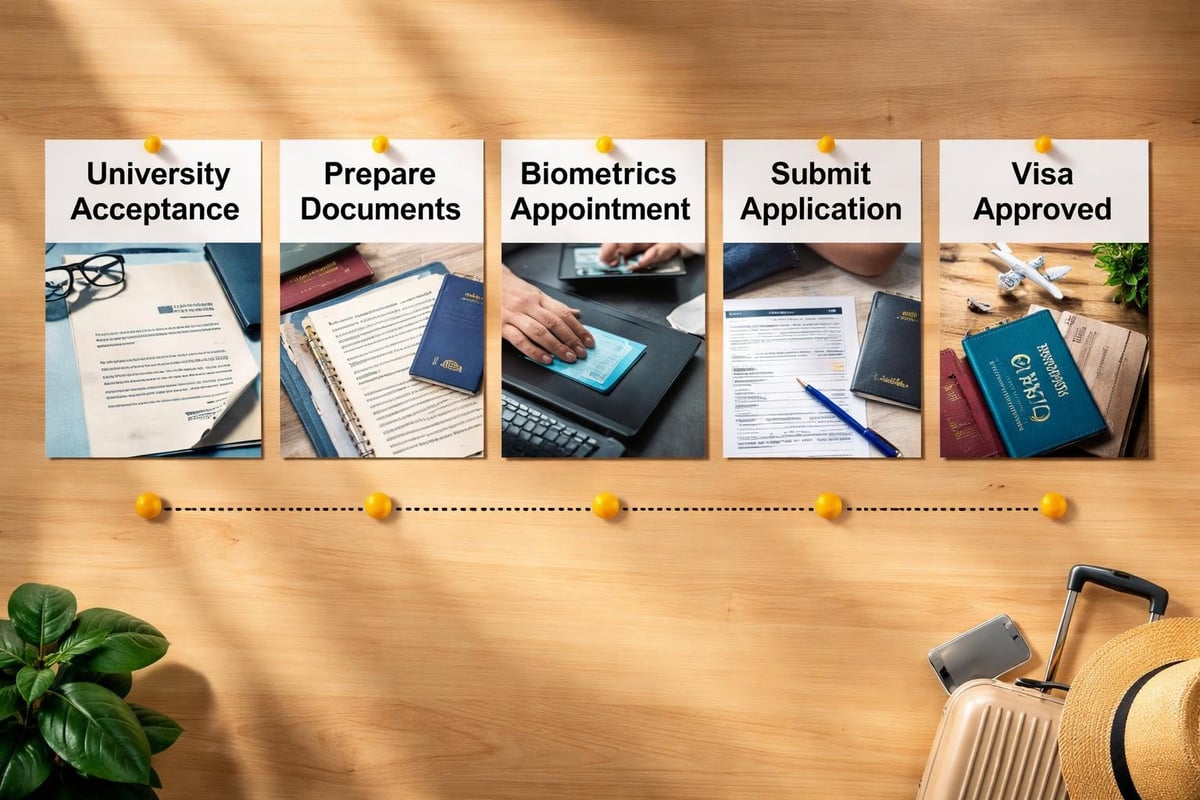
Visa requirements represent a critical component of study abroad trip planning. Northwestern University’s trip planning resources emphasize that visa processing times vary significantly, making early application essential.
Gathering Required Documentation
Student visa applications demand extensive documentation. Prepare these materials well in advance:
- Valid passport with sufficient validity beyond your study period
- Official acceptance letter from your educational institution
- Financial evidence demonstrating ability to cover fees and living costs
- Academic transcripts and certificates
- English language test results
- Tuberculosis test results (required for certain countries)
- Photographs meeting specific size and format requirements
Each country maintains distinct financial threshold requirements. The UK, for example, requires proof of tuition fees plus living costs calculated at specific monthly rates depending on your study location.
Understanding Post-Study Work Rights
Research post-graduation work opportunities before selecting your destination. The UK's Graduate Visa scheme allows international students to remain for two years after completing their degree, providing valuable career development opportunities. Canada, Australia, and New Zealand offer similar post-study work provisions, whilst regulations differ considerably across European countries and the USA.
Practical Preparation Before Departure
The months preceding your study abroad trip require methodical preparation across multiple domains. EF Education First’s preparation guide outlines twelve essential steps, from financial planning through cultural research.
Arranging Accommodation
Secure housing well before arrival. Universities typically offer guaranteed accommodation for first-year international students, providing an easier transition and built-in social networks. University halls include utilities, internet, and often meal plans in the cost.
Private accommodation offers more independence but requires greater responsibility. Consider proximity to campus, transport links, safety of the neighbourhood, and whether utilities are included when comparing options. For those considering antipodean destinations, exploring study in Australia or study in New Zealand options early helps secure appropriate housing in competitive markets.
Healthcare and Insurance Coverage
Comprehensive health insurance remains non-negotiable for your study abroad trip. Some countries include healthcare as part of student visa requirements, whilst others allow you to purchase coverage independently. Understand exactly what your policy covers, including:
Emergency medical treatment and hospitalization
Routine healthcare and prescription medications
Mental health services and counselling
Dental and optical care limits
Repatriation coverage in serious emergencies
Packing Strategically
Airlines impose strict baggage allowances, forcing strategic packing decisions. Prioritize essentials you cannot easily purchase or afford in your destination country.
| Pack These | Buy There | Leave Behind |
|---|---|---|
| Prescription medications | Toiletries | Excessive clothing |
| Important documents (copies) | Bedding | Large electronics |
| Specialty items from home | Kitchen supplies | Valuable jewellery |
| Climate-appropriate clothing | Stationery | Too many books |
| Universal adapters | Casual clothing | Bulky items |
Electronic devices require appropriate voltage converters and plug adapters for your destination. Research local electrical standards before purchasing adaptors.
Cultural Preparation and Mental Readiness
Academic preparation represents only one dimension of a successful study abroad trip. Research discussed by the Associated Press highlights the psychological preparations necessary for managing culture shock, homesickness, and adapting to unfamiliar social norms.
Anticipating Culture Shock
Culture shock progresses through predictable stages. The initial honeymoon phase, characterized by excitement and fascination, typically gives way to frustration as cultural differences create daily challenges. This adjustment period eventually evolves into adaptation and, finally, acceptance of your new environment.
Preparation strategies minimize culture shock impact:
- Research cultural norms around communication styles, social etiquette, and academic expectations
- Connect with current students from your home country at your destination institution
- Learn basic language phrases even when studying in English-speaking countries
- Maintain realistic expectations about the challenges you'll face
- Develop coping strategies for managing stress and homesickness
Building Support Networks
Establishing social connections accelerates adaptation. Join student societies aligned with your interests, attend orientation events enthusiastically, and participate in international student groups. Universities recognize that social integration impacts academic success, prompting most institutions to offer extensive support services specifically for international students.
Maximizing Academic Benefits
The documented benefits of studying abroad extend far beyond earning credits. Students develop enhanced critical thinking skills, broader cultural perspectives, and improved communication abilities that employers highly value.
Engaging with Academic Culture
Educational systems vary internationally in teaching methods, assessment approaches, and student-professor relationships. British universities emphasize independent learning and expect students to pursue knowledge beyond lectures. North American institutions often incorporate more continuous assessment through regular assignments and class participation grades.
Familiarize yourself with academic integrity standards in your destination country. Plagiarism definitions and citation requirements differ between educational systems, and violations carry serious consequences.
Documenting Your Experience
Maintain records of your academic achievements, extracurricular involvement, and professional development throughout your study abroad trip. This documentation proves invaluable when updating your CV, applying for graduate programmes, or discussing experiences in job interviews.
Create a portfolio including:
- Academic transcripts and grade reports
- Certificates from courses, workshops, and training
- Reference letters from professors and supervisors
- Project samples showcasing your best work
- Reflection journals capturing your development
Staying Safe and Healthy Abroad
Personal safety and wellbeing require ongoing attention throughout your study abroad trip. Research your destination's safety profile, register with your home country's embassy, and understand local emergency services procedures.
Health Maintenance Strategies
Adjusting to new environments, climates, and diets challenges your immune system. Prioritize sleep, maintain balanced nutrition despite tempting local cuisines, and establish exercise routines. Universities typically provide health centers offering basic medical care, counselling services, and wellness programmes.
Mental health deserves equal attention to physical health. Homesickness, academic pressure, and cultural adjustment create stress. Utilize university counselling services, maintain connections with family and friends back home, and build local support networks.
Emergency Preparedness
Prepare for potential emergencies before they occur. Store emergency contact numbers including local police, ambulance services, your country's embassy, university security, and emergency contacts back home. Share your accommodation address and contact details with family members. Understand your insurance policy's emergency procedures and claim processes.
Career Development Opportunities
Your study abroad trip offers unique professional development opportunities unavailable at home. Statistics compiled by UC Merced demonstrate that international study experience correlates with higher starting salaries, faster career progression, and increased employment rates.
Gaining International Work Experience
Many countries permit international students to work part-time during term and full-time during holidays. This employment provides financial support whilst building professional skills and expanding your network. Research work restrictions attached to your student visa before accepting any position.
Internships and placements related to your field of study deliver particularly valuable experience. Some degree programmes incorporate mandatory work placements, whilst others allow optional internships. Employers increasingly value candidates with international work experience, viewing it as evidence of adaptability, cultural awareness, and initiative.
Professional Network Building
Attend industry events, career fairs, and networking sessions throughout your study abroad trip. Connect with professors working on research aligned with your interests, as they often have industry contacts and may offer research opportunities. Join professional associations in your field, many of which offer student membership rates and networking events.
LinkedIn and other professional platforms help maintain connections after graduation. International networks prove especially valuable as businesses increasingly operate across borders and seek employees with global perspectives.
Making the Most of Your Experience
Beyond academics and career preparation, your study abroad trip offers opportunities for personal growth and cultural exploration. Balance academic commitments with travel, cultural activities, and building meaningful relationships.
Exploring Your Host Country
Budget time and resources for travel within your host country and region. Weekend trips to nearby cities, holiday adventures to neighbouring countries, and exploration of local attractions enrich your cultural understanding. Many universities offer discounted student travel cards and organize group trips to popular destinations.
Immerse yourself in local culture by attending festivals, trying regional cuisines, learning the language, and engaging with community activities. Volunteering provides meaningful connections with local communities whilst contributing positively to your host country.
Developing Global Competencies
Employers value specific competencies developed through international study. Consciously develop these skills:
Cross-cultural communication through daily interactions with diverse peers
Adaptability by navigating unfamiliar systems and solving unexpected challenges
Independence by managing finances, health, and academics autonomously
Global awareness through understanding international perspectives on complex issues
Language skills even in English-speaking countries through exposure to different accents and expressions
Reflect regularly on your growth across these dimensions, noting specific examples that demonstrate development.
Planning a study abroad trip demands careful attention to academic selection, financial preparation, visa requirements, practical arrangements, and cultural readiness, but the transformative benefits of international education justify the investment. When you're ready to turn your study abroad aspirations into reality, SBUB Group Ltd. provides expert guidance throughout the entire process, from selecting the perfect university and programme to securing scholarships, navigating visa applications, and arranging accommodation in your chosen destination. Their specialized consultancy services have helped countless students successfully launch their international education journeys across the UK, USA, Canada, Australia, and beyond.