
Student Housing UK 2026: The International Student’s Guide to Finding a Home
What if the most stressful part of your degree isn’t the final exam, but the contract you sign before you even board your flight? For the 679,970 international students who chose the British education system last year, securing reliable student housing uk remains a source of significant anxiety. You’re likely worried about the 10% of students who encounter rental scams or the complex web of UK guarantor requirements that seem designed to keep you out. We believe your voice deserves to be heard in the housing market; your transition should be defined by excitement, not fear of hidden council tax bills or unsafe living conditions.
You shouldn’t have to guess whether a property exists or if your deposit is protected by law. We’ve built this guide to empower you with the knowledge to master the UK rental market for 2026, covering everything from specific property types to the legal frameworks that safeguard your rights. You’ll learn how to calculate the total cost of living and identify the red flags that signal a predatory landlord. By the time you finish reading, you’ll have a clear, actionable roadmap to secure a safe, confirmed home, ensuring you land in the UK with the confidence of a local.
Key Takeaways
- Navigate the 2026 landscape of student housing uk by identifying the best fit between university-owned halls, private purpose-built accommodation, and shared rentals.
- Learn how to decode “all-inclusive” contracts to ensure your budget accurately reflects the total cost of living in major UK hubs.
- Master a secure, step-by-step booking process to verify properties from abroad and protect your investment against common rental scams.
- Understand your legal rights as a tenant, including how the Deposit Protection Scheme (DPS) works to safeguard your money throughout your stay.
- Discover how to leverage advocacy-driven support to bridge the gap between international students and landlords for a fairer, more transparent search.
Understanding the UK Student Housing Landscape in 2026
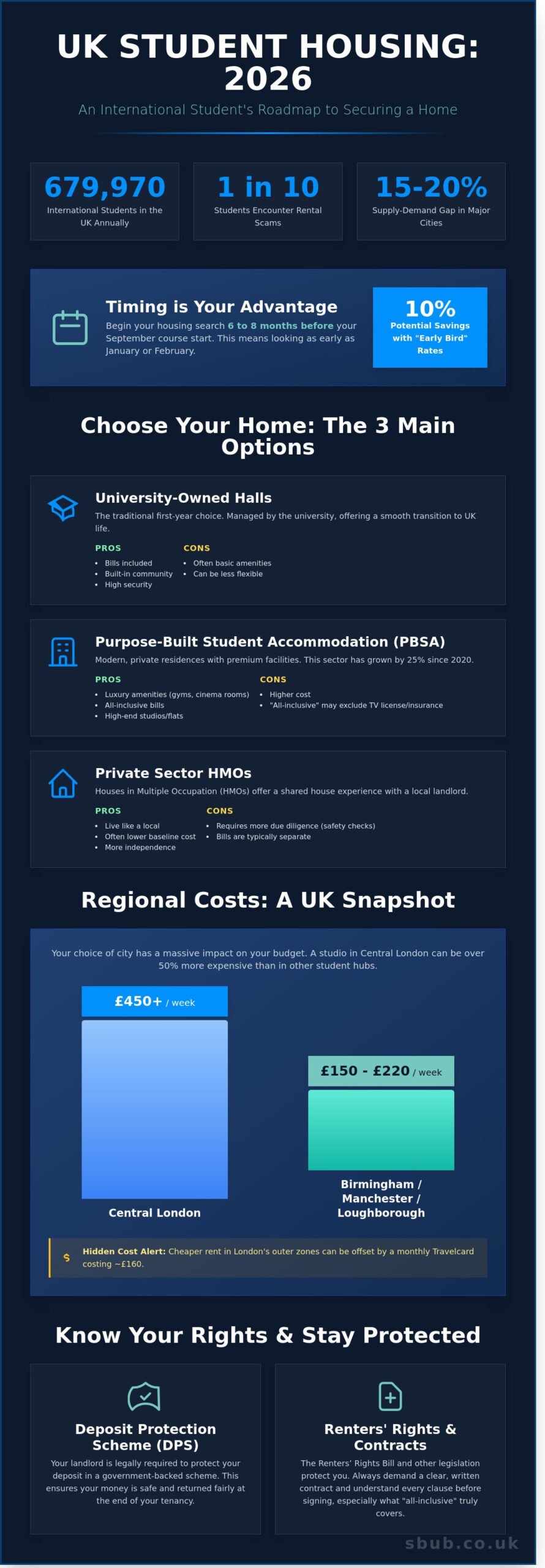
Securing student housing uk for the 2026 academic cycle requires a strategic mindset and an early start. The market is a diverse ecosystem comprising university-owned halls, private purpose-built student accommodation (PBSA), and private sector rentals. In 2026, the reality of the market is defined by high demand. Major urban hubs like London, Birmingham, and Manchester continue to see a 15% to 20% supply-demand gap, making the search competitive for international arrivals. You aren’t just a tenant; you’re a vital part of the UK’s academic community. Your voice is protected by robust legislation, including the Renters’ Rights Bill, which ensures fairness regardless of your background. We believe that being a “small” individual tenant doesn’t mean you lack power. When you understand your rights and the market timeline, you gain significant influence over your living conditions.
Timing is your most effective tool for advocacy. You should begin your search 6 to 8 months before your course starts. For a September 2026 intake, this means researching options as early as January or February. This proactive approach allows you to compare prices and secure “early bird” rates, which can save you up to 10% on annual rent costs compared to last-minute bookings.
The Three Main Categories of Student Living
- University-owned Halls: These are often the first choice for “freshers.” They provide a managed environment where bills are included, making your transition into the UK smoother. They offer a built-in community, though they can sometimes be more basic in terms of amenities.
- Private Purpose-Built Student Accommodation (PBSA): This sector has grown by 25% since 2020. These are high-end studios or flats with all-inclusive bills and luxury common areas. Modern student accommodation in this category often includes gyms and cinema rooms, catering to those who prioritize convenience and modern facilities.
- Private Sector HMOs: Houses in Multiple Occupation involve renting a room in a shared house from a local landlord. It’s the most authentic way to live like a local, but it requires more due diligence regarding safety certificates and contract terms.
Regional Differences: From London to Birmingham
Price disparity across the UK is stark. While a studio in Central London might cost over £450 per week, choosing a location like Loughborough University or Birmingham can reduce your weekly rent to between £150 and £220. This 50% saving can be reinvested into your studies or professional development. When looking at student housing uk, you must factor in “Zone” travel costs. A cheaper room in London’s Zone 4 might seem attractive, but a monthly Travelcard costing roughly £160 could cancel out those savings. Identify vibrant student hubs like Selly Oak in Birmingham or Fallowfield in Manchester. These neighborhoods are tailored to student life, offering safer environments and better access to university resources. Your choice of location is the first step in shaping your UK experience, so choose a city that aligns with both your budget and your ambitions.
Choosing Your Home: PBSA vs. Private Shared Housing
Deciding where to live is the most significant choice you’ll make before arriving for your studies. The 2026 market for student housing uk offers two primary paths: Purpose-Built Student Accommodation (PBSA) or private shared houses, often called Houses in Multiple Occupation (HMOs). Your choice impacts your budget, your safety, and your social circle. Understanding the current market requires looking at the latest student accommodation statistics which indicate a 15% increase in PBSA demand over the last three years as international students prioritize security and simplicity.
The “all-inclusive” label in PBSA marketing often covers electricity, water, heating, and high-speed Wi-Fi. However, it rarely includes your TV license or contents insurance for high-value electronics. In a private HMO, you might manage these bills yourself. This adds complexity but often results in a lower monthly baseline cost. We want you to feel empowered in this decision; choosing the right environment is the first step toward a successful UK experience.
The Perks of Purpose-Built Accommodation (PBSA)
PBSA providers design these spaces specifically for the modern student. You get 24/7 onsite security, CCTV, and secure fob access as standard. These features provide peace of mind for families back home. By 2026, most blocks include gym memberships, cinema rooms, and soundproof study pods within the rent. This model simplifies your finances. One fixed monthly payment protects you against sudden spikes in UK energy prices or currency fluctuations. It creates a predictable financial landscape so you can focus on your degree.
The Reality of Private Shared Houses (HMOs)
Private houses offer a different kind of impact. Living in a residential street helps you integrate into the local community. It is often 20% cheaper than PBSA, though you must vet landlords carefully from abroad. Use video tours and check for HMO licensing on local council websites to ensure the property meets safety standards. If you are moving with a group of friends, renting a whole house together builds a private sanctuary. It offers a level of independence that large blocks cannot match.
Contract lengths remain a sticking point. Undergraduate student housing uk typically runs for 44 weeks, covering the academic year. Postgraduates usually need 51-week tenancies to cover the summer dissertation period. If you choose a 44-week contract but need to stay longer, you might face daily “summer rates” that are significantly higher. PBSA often wins on the social front, offering curated events to combat the loneliness many international students feel in their first term. If you are also planning to launch a startup or side hustle while studying, we can help you amplify your business voice and find the right support networks in your new city.
How to Find and Book Student Housing from Abroad
Securing student housing uk from overseas requires a strategic approach to ensure you aren’t just a number in a database. Your search begins with a firm budget. While the base rent is your primary concern, we recommend factoring in a five-week security deposit and monthly contents insurance, which typically costs between £15 and £30 depending on your location. Understanding the cost of studying in UK helps you allocate your housing budget within your overall financial plan. Under the Tenant Fees Act 2019, holding deposits are strictly capped at one week’s rent, so don’t let anyone pressure you into paying more to “reserve” a room.
We advocate for using university-verified platforms first. Data from 2024 indicates that 88% of international students who utilized university-accredited landlord lists reported higher satisfaction with their living conditions. Once you find a potential home, prepare your digital “renter’s passport.” You’ll need your actual passport, your Confirmation of Acceptance for Studies (CAS) letter, and your student visa documents. Having these ready for immediate upload gives you a competitive edge in fast-moving markets like London or Manchester.
The final step involves the digital contract. Ensure you use secure, traceable payment methods for your initial deposit. Never use cash or wire transfers for these transactions. Most professional providers now use digital signature software, allowing you to review every clause from your home country before committing your signature and your funds.
The International Student’s Virtual Viewing Checklist
You deserve to see the reality of your future home, not a filtered marketing reel. Request a live video tour via WhatsApp or Zoom to verify the property’s current condition. During the call, ask the agent to turn on the taps to check water pressure and open the windows to inspect the seals for drafts. Check the mobile signal strength on their phone screen as they walk through the rooms. Finally, ask for a “neighborhood walk” where they show you the street and the path to the nearest bus stop to ensure the area feels safe and accessible.
Identifying and Avoiding Rental Scams
Protecting your investment is our priority. Red flags include landlords who demand payment via Western Union or prices that sit 25% below the local market average. You can verify a landlord’s legitimacy by checking if they’re registered with the National Residential Landlords Association (NRLA) or a government-approved tenancy deposit scheme like the DPS. A Rent to Rent scam involves a middleman leasing a property and then illegally re-letting it to multiple students without the owner’s knowledge, often leading to immediate eviction when the real owner discovers the arrangement. By staying informed, you ensure your student housing uk experience is secure and fair.
Navigating the Legalities: Deposits, Contracts, and Guarantors
Securing student housing uk is more than just a financial transaction; it’s a legal commitment that requires your full attention. Under the Tenant Fees Act 2019, landlords cannot charge you for references, credit checks, or administration. Your security deposit is also legally capped at five weeks’ rent for properties with an annual rent below £50,000. We believe every student deserves a level playing field, and knowing these rights ensures you aren’t exploited by hidden costs during your move.
Your deposit must be placed in a government-approved Deposit Protection Scheme (DPS) within 30 days of payment. This isn’t optional. It’s a mandatory safeguard that ensures you get your money back at the end of your stay, provided the property is returned in good condition. If your landlord fails to protect your deposit, you could be entitled to compensation of up to three times the original amount. Additionally, as a full-time student, you’re exempt from Council Tax under the Local Government Finance Act 1992. You must provide your local council with an exemption certificate from your university to avoid bills that often exceed £1,500 per year.
Solving the UK Guarantor Problem
Most landlords require a UK-based guarantor who earns at least 30 times the monthly rent to co-sign your lease. For international students, this is a significant barrier. You have three main paths to resolve this:
- Guarantor Services: Companies like Housing Hand act as your co-signer for a fee, typically ranging from 60% to 95% of one month’s rent.
- Advance Rent: Many private landlords will waive the guarantor requirement if you pay 6 to 12 months of rent upfront. While this impacts your initial cash flow, it secures your spot in competitive student housing uk markets.
- Direct Negotiation: We’ve seen success when students provide proof of funding or scholarship letters directly to independent landlords to prove financial reliability without a third party.
Understanding Your Tenancy Agreement
Read every clause. If you sign a “Joint and Several Liability” contract, you’re legally responsible if a housemate fails to pay their share. Individual tenancies are safer because they limit your liability to your own room and rent. Always look for a break clause, which allows you to end the agreement early. This is vital if your graduate visa uk timeline shifts or your study plans change. Finally, never move in without a signed inventory report. This document tracks the property’s condition on day one and is your primary defense against unfair deposit deductions later.
How SBUB Group Simplifies Your UK Housing Search
We act as your Empathetic Champion in a market that often feels indifferent to individual needs. Finding student housing uk is more than a logistical task; it’s the first step in your international career. We bridge the gap between your aspirations and UK landlords, ensuring your voice is heard while shaping the future of your academic stay. Our role is to advocate for you, transforming the small voice of an individual student into a powerful, informed presence that demands fairness and transparency.
Our team provides customized accommodation assistance that starts with your reality. We match your specific 2026 budget to verified properties, eliminating the risk of rental scams that target 15 percent of international applicants annually. By working alongside uk university admission consultants, we align your housing choices with your campus location. This ensures you aren’t stuck with a two-hour commute on your first day of lectures. We create a level playing field where your background doesn’t limit your access to quality living spaces.
Bespoke Consultancy for International Students
We review every line of your rental contract to prevent unfair terms. Our consultants help you understand the fine print, from break clauses to utility responsibilities, ensuring you aren’t signing away your rights. While our Birmingham Head Office provides deep local expertise for the 30,000 plus students moving to the West Midlands each year, our global reach ensures support is always nearby. With dedicated offices in Hyderabad, Subang Jaya, and Riyadh, we provide face-to-face guidance in your own time zone. This local presence allows us to act as a vital translator between your micro-level concerns and the macro-level UK property market.
Start Your UK Journey with Confidence
The SBUB promise is simple: we ensure no student is overlooked by the macro-level housing market. We advocate for you, turning a complex system into a manageable path. You don’t have to face the 2026 student housing uk landscape alone. Our support continues after you move in, helping you navigate local council taxes and community integration. We don’t stop at the application; we help you settle into the rhythms of UK life. This persistent support reflects our commitment to your long-term success and well-being.
Empowerment starts with a single step. Book your first housing consultation with our team today to secure a safe, affordable, and welcoming environment. Your future in the UK depends on a solid foundation. Secure your home today and move forward with the confidence of an expert at your side. Join the conversation and take control of your student experience.
Secure Your Place in the 2026 Academic Year
Finding the right student housing uk involves more than just picking a room. It requires a strategic approach to the 2026 rental market. You need to decide between the structured security of Purpose-Built Student Accommodation and the flexibility of private rentals by early January 2026. Managing international deposits and navigating 40-page tenancy agreements shouldn’t feel like a solo battle. We believe every student deserves a level playing field when entering the British property market.
SBUB Group acts as your advocate from our Birmingham-based head office. We provide local support that bridges the gap between your home country and your new campus. Our team works with a network of 100% verified PBSA partners to ensure your deposit is protected and your contract is fair. We’ve built our reputation on advocacy and transparency, ensuring your voice is heard before you even land. You don’t have to navigate these complex legalities alone.
Get Expert Accommodation Assistance for Your 2026 UK Studies
Your journey to the UK is a massive step toward your future. We’re here to make sure your first home provides the foundation you need to succeed.
Frequently Asked Questions
Do I need a UK guarantor to rent student housing?
You’ll typically need a UK-based guarantor who earns at least £25,000 annually to secure your tenancy. If you don’t have a contact in the UK, you can use professional guarantor services like Housing Hand or pay the full 51-week rent in advance. We advocate for your right to fair housing access, ensuring that your international status doesn’t become a barrier to a safe home.
How much is the average student rent in the UK for 2026?
You should budget between £160 and £240 per week for student housing uk during the 2026/27 academic year. National Union of Students data shows that London prices often exceed £250 per week, while northern cities like Sheffield remain closer to £145. These figures reflect a 5% projected increase from 2025 rates, so planning your finances early is essential for your stability.
Is it safe to book student accommodation online before arriving in the UK?
It’s safe to book remotely if you use platforms accredited by the ANUK National Code or university-approved providers. Approximately 92% of international students secure their rooms before their September arrival date. Always verify that the provider has a registered UK office and check for secure “https” payment portals to protect your impact and financial security while navigating the digital market.
What is the difference between a studio and a cluster flat?
A studio is a self-contained unit with a private kitchen and bathroom, while a cluster flat offers a private bedroom with a kitchen shared between 4 to 8 residents. Studios provide more privacy but usually cost 25% more than cluster rooms. Choosing a cluster flat can save you roughly £2,000 over a 44-week tenancy, helping you balance your personal space with a smaller budget.
Do international students have to pay Council Tax in the UK?
Full-time international students are exempt from Council Tax if their course lasts at least 1 academic year and involves 21 hours of study per week. You must submit an exemption certificate from your university to the local council to avoid an average annual bill of £1,500. We champion your voice in this process, ensuring you aren’t unfairly charged for local services you’re legally exempt from.
Can I move into my student accommodation before my course starts?
Most providers allow early move-ins starting from September 1st, even if your official tenancy begins later in the month. You’ll usually pay a pro-rata daily rate, which averages £30 per night, for this additional period. About 85% of purpose-built providers require 14 days’ notice to prepare your room, so you should contact your landlord as soon as your travel dates are confirmed.
What happens to my deposit if I cancel my booking?
Your deposit is typically refundable if you cancel within the 7-day cooling-off period or if your UK visa application is denied. Under the Tenant Fees Act 2019, landlords must return holding deposits within 7 days if the agreement falls through due to no fault of yours. If you cancel outside these specific conditions, you might forfeit the amount, which law limits to 5 weeks’ rent.
Are utility bills usually included in UK student housing?
Most student housing uk providers include water, electricity, and high-speed Wi-Fi in the weekly rent price. This all-inclusive model currently covers 70% of the private student market, providing you with predictable monthly costs. If you choose a traditional house share with a private landlord, you should budget an extra £25 per week to cover these essential utilities and stay connected to your studies.